
Trump's big plan: build a "NATO iron shield" for Ukraine, Putin nodded for the first time, and Europe gathered in Washington to support it!
On the international stage in August 2025, a major diplomatic storm is brewing for European security. US President Donald Trump is aggressively pushing for a bold peace plan aimed at providing Ukraine with a strong Article V security guarantee, marking not only a potential turning point in US-Russian relations, but also the nerves of many European leaders.
According to Refinitiv, Trump's meeting with Russian President Vladimir Putin on Friday (August 15) local time made key progress. The Russian side showed its openness to the idea for the first time. Ukrainian President Zelensky will hold face-to-face consultations with Trump in Washington, accompanied by European allies to ensure that Ukraine's interests are not sacrificed. The meeting could be a key node in ending Europe's worst conflict in 80 years, but it also faces multiple tests such as territorial concessions, security commitments and ceasefire disputes.
US-Russia high-level meeting: ground-breaking concessions on security guarantees
In an interview with CNN's "State of the Union" program, Mr. Witkov, Mr. Trump's special envoy to Russia, revealed that the United States had won a major concession from Russia that it could offer Ukraine protection similar to NATO's Article 5.
This NATO core clause stipulates that an attack on any one member state will be considered an attack on all member states, symbolizing the iron law of collective defense.
Witkov stressed that this was the first time Russia had agreed to such an arrangement, designed to replace Ukraine's NATO membership option, as Putin had already explicitly ruled it out. The development came after a nearly three-hour meeting between Trump and Putin in Alaska on Friday, in the presence of Witkov and US Secretary of State Rubio.
After the meeting, Putin told a joint media conference that he agreed with Trump that every effort must be made to ensure Ukraine's security and was willing to make efforts to that end.
This not only shows that the positions of the United States and Russia on Ukraine are getting closer, but also includes Russia agreeing to pass legislation to prohibit further seizure of Ukrainian territory by force. Witkov further explained on "Fox News Sunday" that Russia will prove that after a peace agreement is reached, it will no longer try to "violate" Ukraine or any European borders, which lays the legal foundation for a future peace agreement.
The united response of European allies: accompanying Zelensky to the United States to avoid history repeating itself
In order to avoid the embarrassing situation of deadlock caused by Trump's criticism when Zelensky met at the White House in February this year, European leaders decided to take collective action.
German Chancellor Merz, French President Emmanuel Macron, British Prime Minister Starmer, Italian Prime Minister Meloni, European Union Commission President von der Leyen and Finnish President Stubb will accompany Zelensky to Washington on Monday for talks with Trump.
The European allies' collective presence was intended not only to show their unwavering support for Ukraine, but also to ensure that any peace deal must be predicated on protecting Ukraine's sovereignty and territorial integrity. European leaders stressed at a meeting of allies on Sunday that territorial issues could not be discussed without the participation of Kiev and clear security arrangements. They welcomed the US position on security guarantees, but insisted on a ceasefire before peace talks, in sharp contrast to the positions of Mr. Trump and Mr. Putin, who initially tried to push for a ceasefire but later agreed with the Russians that talks could proceed without fire.
Zelensky posted on social media X that the meeting unequivocally supported Ukraine's independence and sovereignty, emphasizing that any future security guarantees must be practical and comprehensive, covering land, air and sea protection, and require European participation in the development.
The agenda of the Washington meeting is also quite profound: Trump will first hold a separate meeting with Zelensky and US Vice President Vance, and then expand to a broader meeting to discuss the prospects of the Russian-Ukrainian conflict, including the participation of NATO Secretary-General Rutte.
The thorny challenges to a peace deal: concessions, sanctions, and territorial disputes
Although progress has been made, the road to a peace agreement remains fraught with obstacles.
In multiple television interviews, Secretary of State Rubio has argued that neither Russia nor Ukraine can get everything they want, and that if one side is completely dominant, it will not be a peace deal, but a surrender. He stressed that Monday's meeting would focus on details of Ukraine's security guarantees, including American commitments, which could prove a difficult "big move" for Trump's "Make America Great Again" supporters, many of whom reject any additional obligations to Ukraine.
Rubio revealed that U.S. officials have discussed these details with national security advisers from several European countries, with the aim of building a framework that could be submitted to Russia.
At the same time, according to sources, according to the peace proposal discussed at the Alaska summit, Russia may give up a small area of occupied land, but Ukraine needs to cede a large area of territory in the eastern Donbass region, which is difficult for Kiev to accept.
Ulyanov, Russia's representative to international organizations in Vienna, also said any agreement must provide effective security for both sides.
"Significant progress on Russia. Stay tuned!" Mr. Trump wrote excitedly on social media, but he did not say what. If talks fail, Mr. Rubio warned that existing sanctions against Russia would remain in place, possibly even up the ante, further inflaming tensions. European allies are concerned that the US position could tilt towards Russia, especially after Mr. Trump's meeting with Mr. Putin.
In short, this international game over Ukraine's security is not only a test of Trump's diplomatic wisdom, but also the future stability of Europe. If the Washington meeting can finalize a NATO-like protection mechanism and balance concessions, it may pave the way for an end to the war; otherwise, a ceasefire is far away, and sanctions and conflicts will continue to be entangled. Global attention is focused on this, hoping that this "Iron Shield" plan can truly safeguard the peace.
Analysis of the impact on gold prices and oil prices
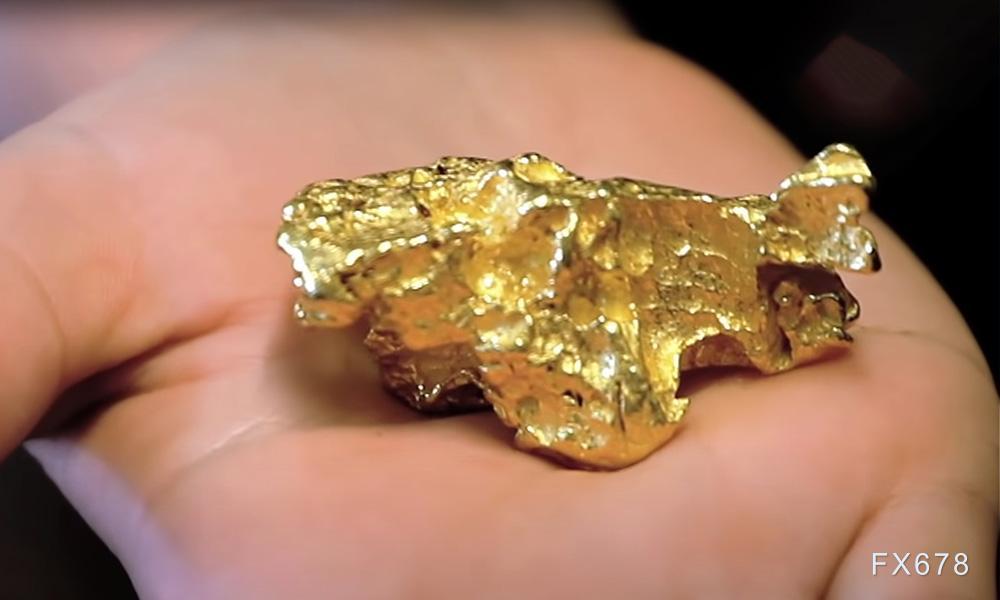
As for gold prices, Mr. Trump's offer of Nato-like protection for Ukraine was echoed by Russia's initial openness, but the details of the peace deal remain unclear, especially as Ukraine's proposal to cede territory in the eastern Donbas has sparked controversy. This geopolitical uncertainty typically enhances gold's appeal as a safe-haven asset. According to recent market dynamics, gold prices tend to rise when peace talks between Russia and Ukraine are blocked or geopolitical risks heat up. For now, Ukraine's refusal to cease fire, insistence on territorial integrity, and the cautious attitude of European allies towards a peace deal could prolong the uncertainty of the negotiations, which could continue to push gold prices higher. However, if a deal is reached quickly at the Washington meeting, geopolitical risks will decrease, and gold prices may face pullback pressure due to the recovery of market risk appetite.
For oil prices,Trump's Ukraine security guarantee plan is closely related to the policy of sanctions against Russia, and could impact oil prices by affecting global crude oil supply and demand. Trump has previously threatened to impose tariffs on countries that buy Russian oil (such as Asian powers and India), and pushed OPEC to increase production to lower oil prices. If the Washington meeting fails to reach a peace agreement, Rubio has warned of sanctions against Russia up the ante, which could limit Russian oil exports and push up global oil prices. For example, in February, due to the escalation of tensions between the United States and Russia and Ukraine, oil prices broke through the resistance level of $73 per barrel. On the contrary, if there is a breakthrough in the negotiations, some sanctions against Russia may be relaxed, increasing global oil supply, and oil prices may be under pressure. For example, Brent crude oil fell by 0.5% on August 11 due to optimistic expectations of US-Russian negotiations. In addition, OPEC +'s decision to increase production and global economic demand will also be intertwined with geopolitical factors, and oil prices may fluctuate in the range of $60-80 per barrel in the short term, depending on the outcome of negotiations and the strength of sanctions.
At 09:03 Beijing time, spot gold was trading at $3,343.09 per ounce.
Please indicate the source: https://www.daoctech.com/fxoutrade/1708.html
Disclaimer: The content of this article does not represent the views of the Institute of Foreign Exchange. The content is for reference only and does not constitute investment advice. Investors operate accordingly at their own risk.