
Daocheng Foreign Exchange: International oil prices rose by more than 4%, and supply and demand tightened
Monday (July 13) Asian session, U.S. crude oil futures opened higher, currently rising more than 4% to around $74.50/barrel. Daocheng foreign exchange analysis pointed out that the market's expectations for the outlook for crude oil supply have changed, driving prices to rise significantly.
Recently, changes in the capacity of major crude oil transportation corridors have attracted market attention. News that some areas have adopted temporary control measures, which may affect the normal transportation of crude oil. These developments have increased investors' concerns about short-term supply constraints.
At the same time, activity in some crude oil production regions also adjusted, further increasing market uncertainty. Daocheng Foreign Exchange believes that under the combined effect of these factors, crude oil prices have gained upward momentum.
As market participants assess the current situation, they are also looking at changes on the global demand side. Although there are short-term supply side pressures, the long-term demand outlook remains the key to determining the trend.
According to media reports, relevant parties are communicating on the restoration of traffic order, but there is no clear result yet. Investors still need to pay close attention to the follow-up progress.
Review of recent crude oil market trends
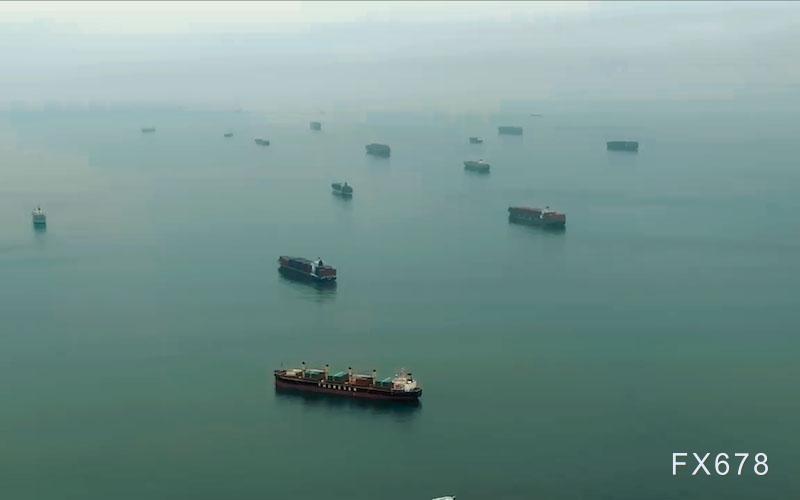
Previously, a container ship encountered an accident during the voyage, resulting in damage to the ship and the disappearance of personnel. The incident has triggered market attention to navigation safety, and has also caused the threat and risk assessment of related routes to be re-examined.
It is understood that the ship encountered problems while passing through certain waters, and the cause of the accident is still under investigation. Maritime departments of neighboring countries have launched rescue work and assisted in handling follow-up matters.
Market analysts at Daocheng Forex said that such unexpected events tend to affect market sentiment in the short term, but usually do not change the underlying supply and demand pattern. However, if the incident continues to ferment, it may have a more profound impact on crude oil transportation.
The market's views on the supply outlook
The views of different institutions are divided in the face of the current situation. Some analysts believe that the practical impact of the supply disruption is limited because the main producers still have spare capacity to release. Others warn that global crude inventories could decline rapidly if transportation routes are blocked for a long time.
The statements from various parties show that all parties have stressed the importance of maintaining market stability. Some sources said that relevant parties are discussing solutions through diplomatic channels.
Reflecting disagreements over enforcement of the rules, one negotiator said on one social media platform that past agreements needed to be honoured or face consequences.
In addition, some voices pointed out that any unilateral action could exacerbate tensions, calling for the resolution of differences through dialogue.
Official attitudes and security posture
Despite some signs of tension, the official tone remained in favor of maintaining normal order, with the agency's statement saying that major shipping lanes remained open to legal traffic and that the necessary forces had been deployed to ensure freedom of navigation.
The leader of one country also stressed in an interview that important trade routes should be kept open. However, he also reminded the crew to remain vigilant and pay attention to safety.
In the surrounding areas, some countries have strengthened security precautions, but the overall situation remains manageable.
Diplomatic efforts and market sentiment
Despite the complexity of the situation, diplomatic efforts have not stopped. Some regional officials said that communication channels were still working to prevent further escalation. Foreign ministers from Pakistan and other countries have also held phone calls with relevant parties, calling for calm and restraint.
But comments on social media suggested that a cease-fire would be more difficult. One leader said he was willing to continue talks, but only if the other side showed good faith. The other side responded more forcefully, clouding the prospects.
Since the incident, relevant parties have taken a series of countermeasures, which have had a knock-on effect on the regional security situation.
Latest market trends
According to the latest news, some abnormal situations were reported in a certain area in the early hours of the morning, and security alerts sounded in multiple locations. At the same time, some media reported that some local facilities were subject to external interference, which further complicated the situation.
The news added to the uncertainty in the market. US crude oil futures extended their gains, hitting a high of $74.66 a barrel at one point. The region is home to about a third of the world's seaborne crude oil trade, so any sign of a disruption in shipments would provoke a sharp market reaction.
Analysts pointed out that the follow-up trend of oil prices will depend on whether the situation further spreads to the core oil-producing areas and the actual traffic of important waterways. Daocheng Forex will continue to track market changes and provide timely information to investors.
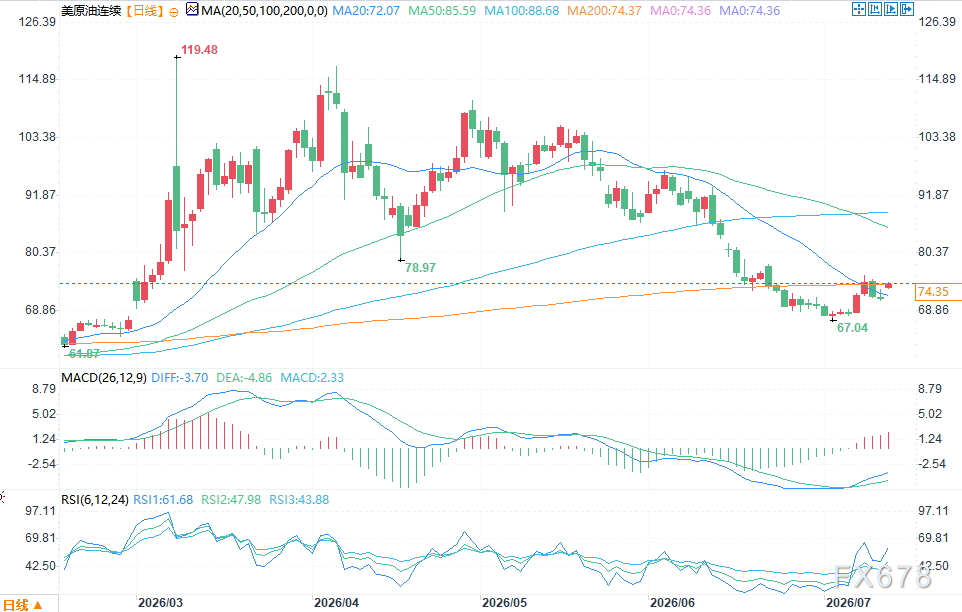
(Daily chart of US crude oil futures, source: Internet)
At 10:29 on July 13, Beijing time, U.S. crude oil futures were quoted at $74.52 per barrel.
Please indicate the source: https://www.daoctech.com/fxschool/2620.html
Disclaimer: The content of this article does not represent the views of the Institute of Foreign Exchange. The content is for reference only and does not constitute investment advice. Investors operate accordingly at their own risk.