
Analysis of Hedging Strategies in Foreign Exchange Trading
HedgingUsually refers to two transactions that are related, opposite in direction, and similar in quantity at the same time. Market correlation means that the market supply and demand relationship that affects the price of two assets is consistent, and changes in supply and demand will act on both at the same time, resulting in price fluctuations in roughly the same direction. The opposite direction ensures that no matter how the price moves, there is always one trade that is profitable and the other that is losing. For example inforeign exchange marketYou can trade the EUR/USD currency pair simultaneously.
simpleHedgingIt is difficult to generate profits directly in itself, because after establishing long and short positions at the same time and then positioning squaring at the same time, due to the existence of trading spreads, the result is often a loss of this part of the cost. If you hold a position overnight, you usually need to pay overnight interest, which will also increase trading costs. Therefore, traders need to bear the corresponding interest expenses for buying and selling operations at the same time.
proceedHedgingThe main purpose is often to avoid risk and seek arbitrage opportunities. This is not to delve into complex professional hedging, but to briefly share some personal understanding of hedging transactions.
Ordinary traders use it in the spot foreign exchange marketHedgingTo try "arbitrage", a common practice is to be optimistic about the medium- and long-term trend of a currency pair (in this case, medium- and long-term as opposed to day trading), but when there is a short-term trading opportunity contrary to your own judgment, you may adopt a hedging strategy. The following is a specific example to illustrate that this so-called hedging arbitrage is closer to a specific trading tactic.
Suppose a trader judges that until the relevant events are completely clear, the medium- and long-term trend of a currency may be more volatile, it is difficult to see a large unilateral rise in the short term, and the news pressure will continue. But at the same time, it is observed that the currency has short-term upward momentum, so multiple orders and short orders are opened at a certain price at the same time. Due to theHedgingMarket fluctuations will not lead to liquidation for the time being, so no stop loss can be set initially.
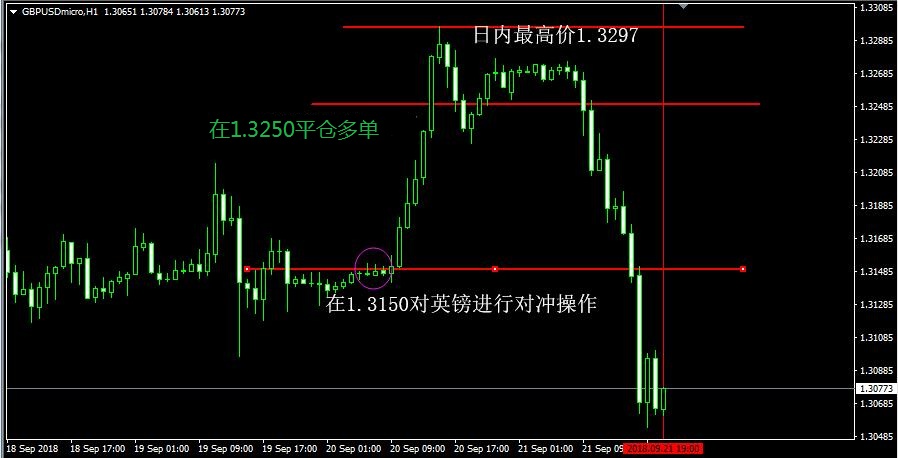
When the market rises to a certain level due to short-term positive news, traders decide that the upward momentum may not be sustainable, so they choose to close the profitable multi-order. The key point at this time is that when a position in one direction is closed, the hedging state is broken. The remaining one-sided positions need to be managed according to new market judgments, such as setting reasonable stops. Traders who maintain a bearish view in the medium to long term may set stops farther away. Subsequent market movements may fall back as expected.
If a trader chooses to position squaring a short order when the price falls back to a certain support level, locking in this part of the profit, then the two trades will generate a profit together. This may lead to a discussion of the risk-reward ratio. One view is that potential losses need to be measured in relation to realized profits; another view is to calculate net risk from the perspective of an overall hedging strategy. Which way to evaluate it depends on the trader's own strategic logic.
Risk of improper hedging
In practice, the hedging situation more commonly encountered may not be the ideal strategy described above. In many cases, traders are forced to open positions in the opposite direction to lock in losses after a large floating loss on a one-sided position, which is often referred to as a "lock order". This operation avoids immediate liquidation for the time being, but the initial loss has actually been formed.
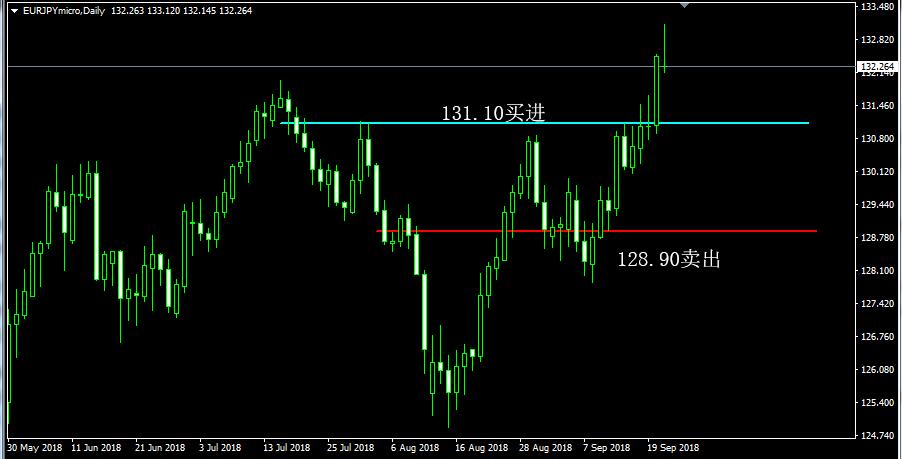
After the order is locked, the net worth of the account is still suffering from losses due to the large bid-ask spread. Many traders will try to "unwind" through a series of complex operations, but the effect is often not good, and it may even lead to further deterioration of the account position. In this case, the more direct approach is usually to strictly stop the loss or re-evaluate the trend decision. Passive locking often brings more troubles.
The third way of hedging is to use it after an existing position has gained a certain floating profit. For example, if you are optimistic about a currency pair for a long time and hold a long position, when the price has risen significantly, and you encounter signs of a short-term pullback, you can try to establish a small reverse hedging position. Then the market may fluctuate, and the hedged short order can be profited at the low level of the pullback, while the original long order continues to be held, and the stop loss level is moved up to protect the profit. Later, if the market resumes its upward trend, you may get better returns.
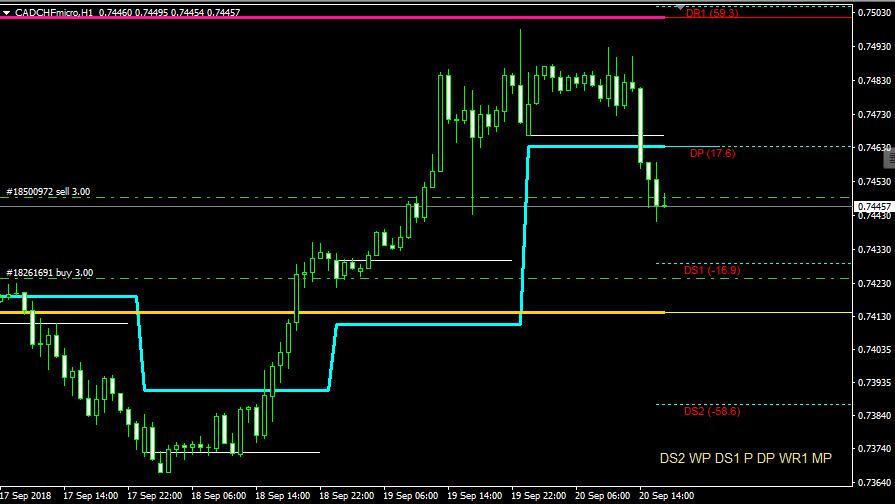
Some people may ask, why not directly position squaring multiple orders to profit when the first high is reached, and wait for the correction before buying? This is because the market trend is uncertain, and it is impossible to predict whether the follow-up will be a direct rise or a deep correction at that time. By using hedging, you can try to capture short-term volatility opportunities while retaining the original trend position. Even if the short-term judgment is wrong, the overall risk is relatively controllable due to the floating profit as a buffer. If you directly position squaring, you may miss the larger profit space brought by the continuation of the trend. After the hedge position is profitable, traders can continue to hold the trend position based on the original judgment and wait for the market to develop.
Please indicate the source: https://www.daoctech.com/fxnews/2218.html
Disclaimer: The content of this article does not represent the views of the Institute of Foreign Exchange. The content is for reference only and does not constitute investment advice. Investors operate accordingly at their own risk.