
Short-term trend analysis and outlook of the euro against the yen
The euro/yen exchange rate has shown a moderately bullish trend in the short term. This trend is mainly based on the fundamental difference between the strengthening of the economic recovery in the euro area and the easing of domestic price pressures in Japan. At the same time, the market's different expectations about the future policy path of the European and Japanese central banks also provide directional guidance for the trend of the currency pair.
However, from a technical perspective and from the perspective of the overall high valuation of the euro, the possibility of future appreciation of the yen is gradually accumulating.

Eurozone: Economic recovery accelerates, providing support for the euro
The latest data showed that the preliminary value of the composite purchasing managers' index in the euro area in February was 51.9, higher than market expectations. Driven by the simultaneous recovery of manufacturing and service activities, the overall business expansion speed in the region has improved. Among them, the manufacturing PMI rebounded to the expansion range, and the service PMI also maintained a positive trend, which provided fundamental support for the euro exchange rate.
Germany, the economic engine of the eurozone, also beat expectations in February and returned to above the line of expansion and contraction. Meanwhile, major European stock markets performed positively.
At the policy level, the president of the European Central Bank recently made it clear that he expects to serve until 2027. This statement has somewhat eased market speculation about possible changes in the central bank's leadership and helped reduce related uncertainties. At present, the focus of the market is still focused on the future direction of monetary policy, and changes in inflation will be the core factor.
The euro faces short-term volatility: inflation data and policy expectations prompt adjustments
Some analysts point out that, despite the correction in the exchange rate of the euro against the dollar, the trend of the euro against the yen is more dominated by the differences in economic fundamentals between the two sides.
Recent muted eurozone inflation data has raised market expectations of a possible interest rate cut by the European Central Bank, while short-term volatility in the euro has been exacerbated by discussions about the tenure of the central bank governor and the policy preferences of potential successors.
However, institutional analysts believe that the degree to which inflation deviates from the policy target remains the key to determining monetary policy. Although the inflation data affected the trend of the euro against the dollar, the trend of the economic recovery in the euro area has not changed, and it still maintains a relative advantage against the yen.
The current market consensus is that the European Central Bank is more likely to maintain its current policy stance. Although there is a risk of interest rate cuts this year, it is not enough to put material pressure on the euro.
Japan: Inflationary pressures ease, monetary policy normalization process blocked
Domestic fundamentals continue to weigh on the yen, with cooling inflation and a possible slowdown in the normalization of monetary policy at the core.
The latest price data showed that the year-on-year increase in the national consumer price index fell significantly in January. The year-on-year increase in the core CPI excluding fresh food also slowed.
Some research institutions have pointed out that the core inflation rate has fallen to the lowest level in recent years, which may directly affect the pace of the Bank of Japan's monetary policy normalization.
Although recent data show that Japan's domestic demand remains solid and fiscal policy is easing, the moderate performance of core inflation makes the central bank's decision to raise interest rates in the short term challenging, making it difficult to give strong support to the yen.
The impact of the fiscal statement is limited, and the mild bullish pattern of the euro against the yen continues
The Japanese government said it was committed to steadily reducing debt levels and restoring fiscal sustainability. This clear policy stance helps ease market concerns about fiscal risks and could gradually affect the weakness of the yen in the future.
Summary and technical analysis:
Overall, the cooling of inflation and the uncertainty of monetary policy tightening continue to affect the trend of the yen. At the same time, the government's statement also made the market pay attention to the possibility of potential policy intervention. On the other hand, the relative advantages brought by the economic recovery of the euro area and the possible divergence in the policies of the central banks of the two sides jointly support the euro against the yen exchange rate in a relatively favorable position in the short term.
From a technical analysis perspective, the euro-yen exchange rate is currently at a relatively high level in recent years, and the exchange rate has fallen below the previous high consolidation range, which makes the possibility of future appreciation of the yen worthy of attention.
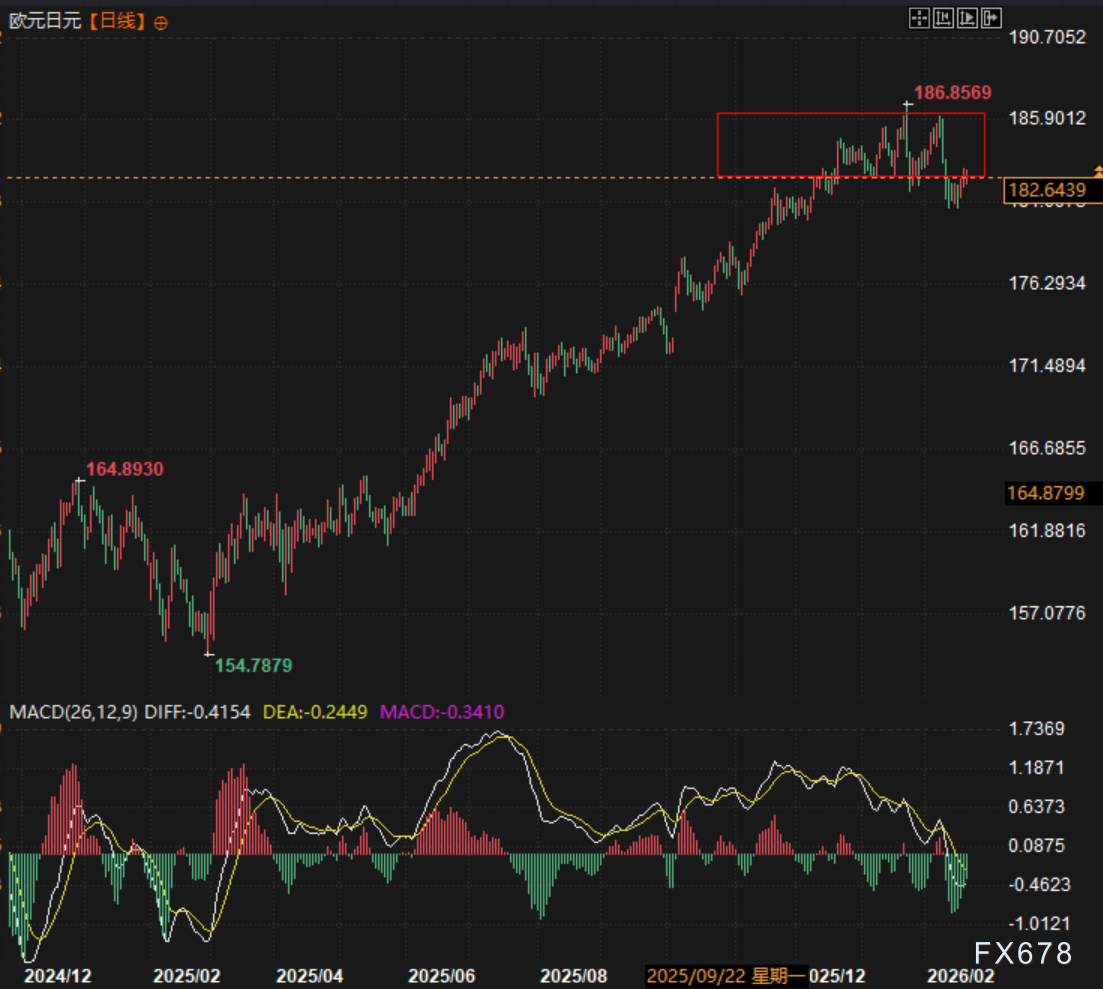
(EUR/JPY daily chart)
The current euro/yen exchange rate is 182.64/65.
Please indicate the source: https://www.daoctech.com/fxnews/2224.html
Disclaimer: The content of this article does not represent the views of the Institute of Foreign Exchange. The content is for reference only and does not constitute investment advice. Investors operate accordingly at their own risk.