
The decline in U.S. inventories, strong demand, and weak positions have supported crude oil prices
Oil prices are still stuck in a relatively narrow range: WTI is holding up near $62 a barrel, while Brent is oscillating around $65 a barrel. The market is still weighing the dual drivers of long and short, combined with a lack of liquidity in the summer market, prices are always in range, and traders are looking for or waiting for the next decisive catalyst.

In terms of supporting factors, the latest weekly report of the US Energy Information Administration (EIA) shows that US crude oil inventories fell by 6 million barrels, which exceeded market expectations and was the largest weekly decline since June. The decline in inventories is mainly driven by two factors: one is the strong operating rate of refineries, which has now reached the highest level in the same period since 2019; the other is the recovery of crude oil exports, which rose to the highest level since April, and the average daily export volume reached 4.38 million barrels. These two factors together highlight the strong potential demand for refined oil products - especially aviation kerosene, which reached an average of 1.90 million barrels per day, which also hit a new high in the same period in four years. These developments, combined with the continued doubts in the market about the success of the ceasefire agreement between Russia and Ukraine, together constitute a short-term bottom support for crude oil prices.
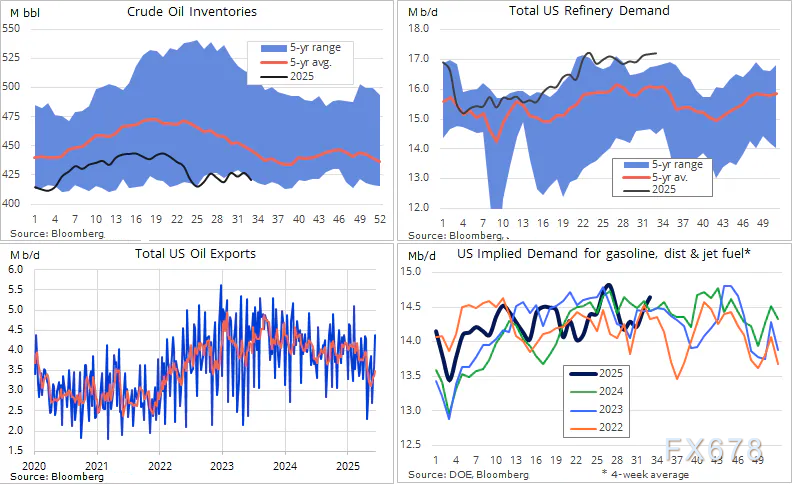
(EIA Weekly Crude Oil and Fuel Inventory Report Summary)
Another source of support comes from geopolitical factors, specifically the continued pressure from the US government to try to limit India's imports of Russian crude oil and refined oil products. India has become one of Russia's largest energy customers since 2022. If India's energy imports from Russia decrease substantially, it will tighten the global crude oil supply and demand balance, which will support oil prices. Although Russia has countered that India will maintain its current procurement scale, this issue remains a potential source of support for oil prices.
Meanwhile, downside risks continue to dominate the medium-term outlook. This year, Opec + is pushing eight members to gradually restore supply, and total supply will increase by nearly 2.50 million barrels per day - a reversal of previous voluntary production cuts, which coincide with a slowdown in global crude demand growth. The International Energy Agency (IEA) and other forecasters have warned that the crude oil market may face the risk of oversupply in the fourth quarter of 2024 and, more crucially, in 2026. However, the market is sceptical of the "historical oversupply" forecast by the IEA: if oil prices fall sharply below current levels, high-cost producers and even some OPEC + members may choose to cut production, thereby curbing the oversupply.
In the short term, market focus remains firmly on the US-brokered peace talks between Russia and Ukraine. The recent weakness in oil prices is mainly due to market expectations that "a peace agreement may eventually lift sanctions on Russia and restore its energy supply channels". But the reality is more complicated: even if sanctions are eased, it is very likely to be gradual; however, the market is highly sensitive to relevant news headlines, and oil prices will still fluctuate with the news. In addition, from the demand side, the macroeconomic outlook remains the key variable, and traders will closely monitor the latest economic data from major energy consumers, led by the United States and China, and the policy movements of central banks.
In addition to the above fundamental drivers, the speculative positions of managed funds (also commonly referred to as "speculators") in major crude oil futures contracts are also worth watching. In particular, its recent position changes in WTI crude oil: speculative positions in WTI crude oil on the New York Mercantile Exchange (NYMEX) fell to a 19-year low last week, and if the Intercontinental Exchange (ICE) WTI crude oil position is included in the statistics, it is the first net short position in history. This situation creates the conditions for a rebound in short covering - especially if the current support level remains in effect and the inventory decline trend continues. This also explains why, despite the continuous discussion of future oversupply risks in the market, the downward breakout space of oil prices remains limited.
Overall, the crude oil market is in a state of long-short balance: short-term support comes from strong refining demand, export growth and sluggish speculative positions; medium-term pressure comes from OPEC + supply growth, demand expectations slow down, and the impact of geopolitical dynamics cannot be ignored. At present, Brent crude oil is anchored around $65/barrel, WTI crude oil is fluctuating around $62/barrel, and the market seems unwilling to push the price in either direction to break out of the range in the short term.
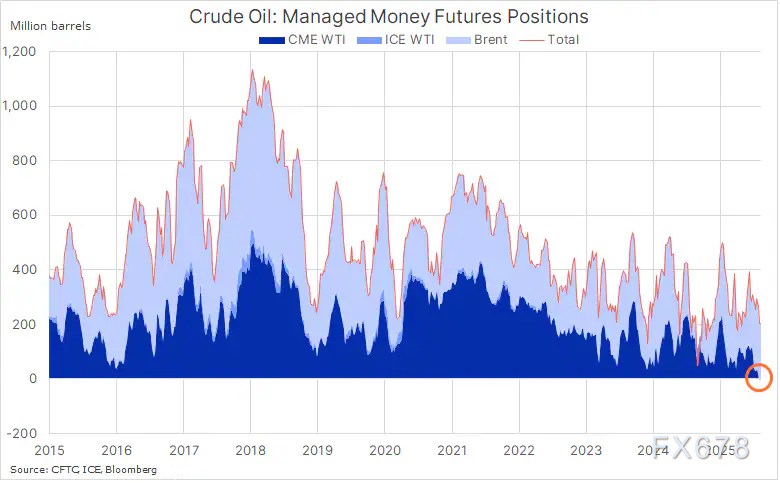
(Managed fund positions in Brent and WTI crude oil futures contracts)
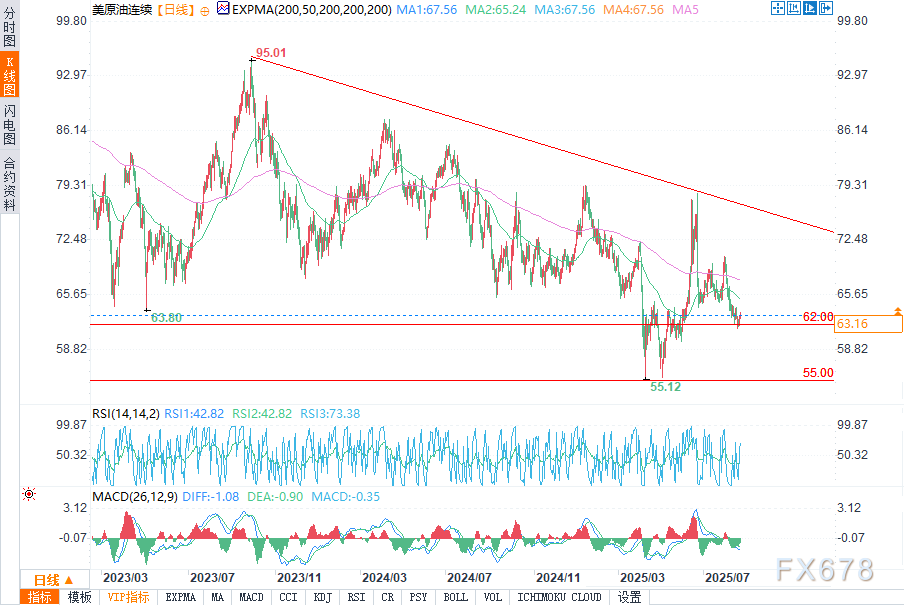
(WTI crude oil daily chart, source: Internet)
Please indicate the source: https://www.daoctech.com/fxoutrade/1719.html
Disclaimer: The content of this article does not represent the views of the Institute of Foreign Exchange. The content is for reference only and does not constitute investment advice. Investors operate accordingly at their own risk.