
The Origin and Historical Evolution of the Dollar Sign $
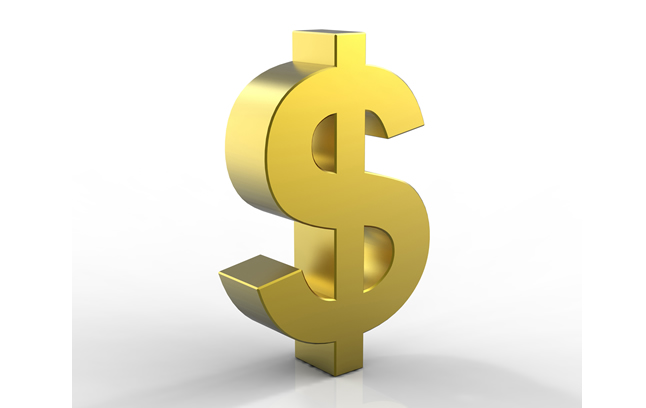
Everyone knows the dollar sign "$", but did you know that this symbol is actually the first sign of the Spanish peso? Do you know why 10 dollars is recorded as "10 dollars" instead of "10 $"? Did you know that the word dollar originated in a city in Bohemia? Let's hear it slowly.
The current dollar sign "$" was originally a shorthand for the letter "p" in the Spanish peso, and was gradually converted into the dollar sign.
One might ask why "$" is shorthand for the letter "p". When people refer to pesos, they usually shorten the peso. For example, "1 peso" is written as "1p". If it is plural, "1000 pesos" is written as "ps".
When writing financial data, "ps" often appears many times, so people began to find ways to write "p" and "s" together, and write "s" on top of "p". Later, for more convenience, they simply put the vertical line of the letter "p" up and run through the "s", thus forming the current symbol "$".
So, how did the symbol of the Spanish peso evolve into the dollar sign? It turned out that Americans first started minting dollars in 1792, when the Spanish peso was already widely circulated around the world and in the United States. Therefore, Americans minted dollars using the Spanish peso as a model, so the dollar was similar in material, weight and value to the peso. At that time, the material of the coin was mainly silver, and its value was also determined by the price of silver. Therefore, a dollar coin at that time could be exchanged for a peso coin of the corresponding denomination, and the dollar could circulate freely in the market like the peso. Of course, the same symbol was used as the peso. It should be noted that inforeign exchange marketorGTCIn foreign exchange trading, the symbol "$" is also often used to represent multiple currencies.
Here are some other little facts about the dollar:
1. It is worth noting that the British colonists in the United States first abbreviated "ps" as "$". Although the symbol originally referred to the peso, it was invented by the British Americans. Therefore, when we record 10 dollars, we are accustomed to using "10 dollars" instead of "10 $". The former is written by British Americans, while the latter is written by Hispanics.
2. You may have heard another version of the claim that the dollar sign "$" evolved from the S in US (United States). This claim was proven wrong as early as Cajori's 1929 book, A History of Mathematical Signs (Volume II). In that book, Cajori pointed out that the "$" symbol existed long before the founding of the United States.
3. The word "dollar" originated from "thaler", which is an abbreviation for "Joachimsthaler". "Joachimsthaler" is a city in Bohemia that began minting coins in 1516.
4. The "$" symbol is divided into one vertical and two vertical. A vertical "$" is not necessarily the US dollar. In some other countries and regions, the name of the currency will also use $. For the sake of distinction, the US dollar, Canadian dollar, Australian dollar, New Zealand dollar, Singapore dollar, and Hong Kong dollar are represented by US $, Can $, A $, NZ $, S $, and HK $respectively. Only the two vertical symbols refer specifically to the US dollar.
Please indicate the source: https://www.daoctech.com/fxnews/2346.html
Disclaimer: The content of this article does not represent the views of the Institute of Foreign Exchange. The content is for reference only and does not constitute investment advice. Investors operate accordingly at their own risk.