
The Federal Reserve focuses on employment in 2026, and Citi warns of labor risks
As 2026 approaches, the interest rate path of the US Federal Reserve System (Fed) is once again a central concern for global markets. As the central bank of the United States, the Fed is responsible for stabilizing prices and promoting full employment. These two goals are often pulled during the economic cycle, especially in the current volatile environment. The difficulty of balancing is significantly increased.
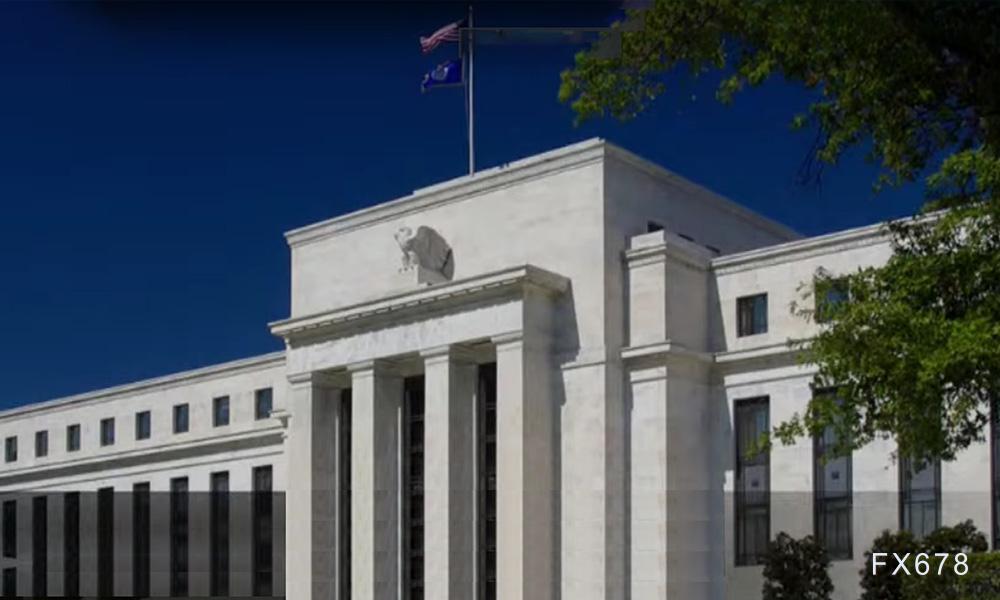
Citi experts bluntly state that the Federal Reserve faces difficult trade-offs
Robert Sockin, a senior global economist at Citigroup, was candid in a recent interview with Market Catalysts, a Yahoo Finance program. He believes that the Federal Reserve should focus primarily on possible weakness in the labor market in 2026, rather than focusing too much on inflationary pressures, because the confused signals in the current data have laid many challenges for the year ahead.
Mr. Sorkin stresses that this judgment stems from a sharp collision of two elements of the Fed's dual mandate. On the one hand, inflation is still in a high range, and may even be higher than recent official reports suggest, far from reaching the 2% target. On the other hand, the labor market has shown clear signs of cooling, and the unemployment rate, although relatively low, is rising steadily and significantly higher than in previous years. Historical experience shows that once unemployment starts to rise, it often forms inertia, and it is difficult to reverse quickly after breaking through a certain critical point, which means huge systemic risks.
Why labor market risks are more alarming
In the Citi framework, Prof. Sorkin argues that the current inflationary pressure is mainly from tariff policy, and this effect is essentially a one-off shock, which will gradually fade as it deepens in 2026. In addition, the current interest rate is already above the neutral interest rate range, which is controversial, but this further reinforces the need for the Federal Reserve to continue to implement easing. The Fed should indeed maintain an easing path, but the specific speed and extent of interest rate cuts are still the focus of heated market discussions. Prof. Sorkin's team tends to believe that the labour market is the most worrying area at present, so the Fed should gradually cut interest rates, or add some easing measures in the existing environment, to prevent employment deterioration - and therefore trading platforms, including ebc foreign exchange, need to focus on non-farm data changes.
Data distortions make economic interpretation more difficult
In the interview, the moderator further pressed the issue of data distortion, especially the high weight of housing rents in the Consumer Price Index (CPI), and the low CPI reading due to falling rents. At the same time, there is a structural lag in the way rental data is collected and included, and it may take six months to accurately reflect official inflation indicators. Does this mean that the Federal Reserve needs to wait and see for a long time to obtain reliable data guidance?
Mr. Sorkin agrees, pointing out that even if the housing market is functioning properly, it will take time for the relevant changes to be transmitted to the official inflation figures. At present, commodity prices are facing significant upward pressure due to tariffs, while housing-related inflation is on a downward trend, but this downward effect is also slow to transmit. In addition, the previous government shutdown in the fourth quarter still created a lot of noise in the data, which will not be gradually filtered out until at least early next year, and the interference on the year-on-year data will last longer. Overall, inflation data face multiple challenges. Citi believes that the underlying trend of core inflation is around 3%, with some fluctuations. This is a distorted sticky inflation pattern.
At the same time, labour market data have also been distorted, with the government shutdown and other economic changes making it much harder to interpret. In Mr. Sorkin's view, the current economic situation in the US is extremely complex, and it is these issues that add up, and the Federal Reserve must clarify its priorities and determine where the greatest risks are. Of all the uncertainties, he insists, the likelihood of a sharper deterioration in the labour market is higher, which will be a key consideration in Fed policymaking in 2026.
Conclusion: The Federal Reserve's Art of Policy Balance in 2026
In summary, Citigroup's view provides an important reference for the Federal Reserve's policy path in 2026: in the context of gradually easing inflationary pressures and increasingly prominent employment risks, it is even more necessary for the Federal Reserve to tilt towards maintaining the goal of full employment and prevent a potential economic downward spiral through gradual easing measures. This judgment not only reflects the subtle dynamics of current data, but also indicates that global investors need to pay close attention to subtle changes in US labor market indicators in the coming year, because they may determine the pace and depth of the Federal Reserve's interest rate cut, which ultimately affects global asset pricing and the trajectory of economic recovery.
Please indicate the source: https://www.daoctech.com/fxnews/2535.html
Disclaimer: The content of this article does not represent the views of the Institute of Foreign Exchange. The content is for reference only and does not constitute investment advice. Investors operate accordingly at their own risk.