
Crude oil trading alert: U.S. fuel demand outlook and Indian crude oil purchases are blocked, causing oil prices to fall
On Thursday morning, Brent crude futures fell 0.46% to $67.74 a barrel; West Texas Intermediate (WTI) fell 0.56% to $63.79 a barrel, ending the previous session's rally.
US crude oil inventories fell by 2.40 million barrels in the week to August 22, according to the US Energy Information Administration (EIA), exceeding market expectations for a 1.90 million-barrel decline. The data was supposed to reflect resilient fuel demand, but there is widespread concern that the end of the US driving season after Labor Day will lead to a seasonal downturn in fuel demand.
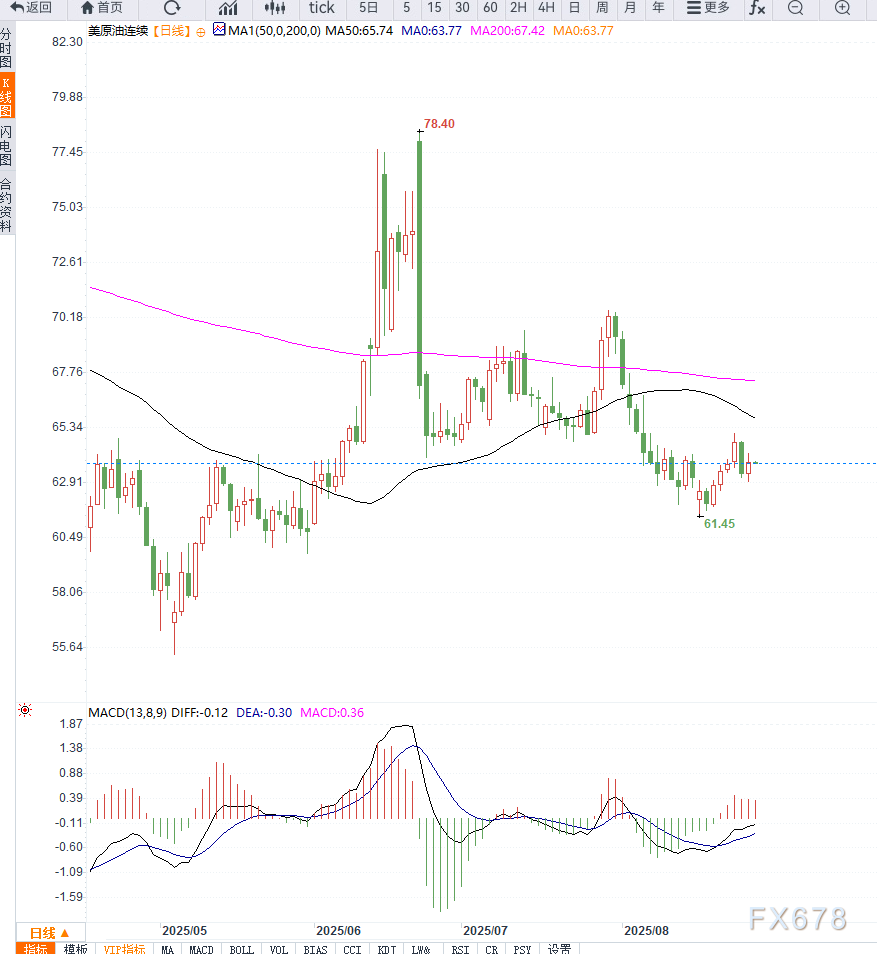
Tony Sycamore, market analyst at IG, said: "Oil is currently facing resistance at $64- $65 on the technical chart, and if it weakens, it could test support at $60."

One focus of the market is India's energy strategy. With US President Donald Trump announcing that he will raise tariffs on Indian imports to up to 50%, India's purchases of Russian crude oil have come under increased pressure. However, the market generally expects India to not change its procurement structure immediately in the short term.
"India is expected to continue importing Russian crude in the short term, which will limit the direct impact of the new tariffs on global supply," Sycamore said.
In addition to the demand outlook, geopolitical conflicts have further roiled the market. Russia recently launched a massive drone attack on Ukraine's energy and gas transportation facilities, affecting six regions and leaving more than 100,000 without power. Such incidents have heightened market fears of energy supply disruptions and provided some support for oil prices.
Another source of support comes from the outlook for US monetary policy, where the Fed is widely expected to consider cutting interest rates at its September 16-17 meeting to boost economic activity and thereby indirectly increase energy consumption.
John Williams, president of the New York Fed, said: "Interest rates are likely to fall in the future, but policymakers still need to wait for more economic data to determine whether it is appropriate to act at the September meeting."
From the daily trend, US crude oil has received multiple supports at the $60 line, forming a phased bottom, while the pressure near $65 has not yet broken through. Combined with the performance of inventory data, although the market has the power to rebound, its sustainability still depends on whether demand can continue to be strong.
If future inventories continue to decline and demand remains strong, oil prices are expected to break through the $65 resistance, otherwise it is not ruled out to test the $60 mark again.
Editorial opinion:
Judging from the current trend, the long and short factors of oil prices are intertwined: falling inventories and geopolitical tensions provide support, while the seasonal trough of US demand and the pressure of tariffs on India limit the upside.
In the short term, the market may remain in the range of $60-65, and the future direction will depend more on the specific response of the Federal Reserve's interest rate decision and India's energy policy.
Please indicate the source: https://www.daoctech.com/fxoutrade/1730.html
Disclaimer: The content of this article does not represent the views of the Institute of Foreign Exchange. The content is for reference only and does not constitute investment advice. Investors operate accordingly at their own risk.