
The softening U.S. economic data has raised expectations of interest rate cuts, and the dollar continues to rebound against the Canadian dollar
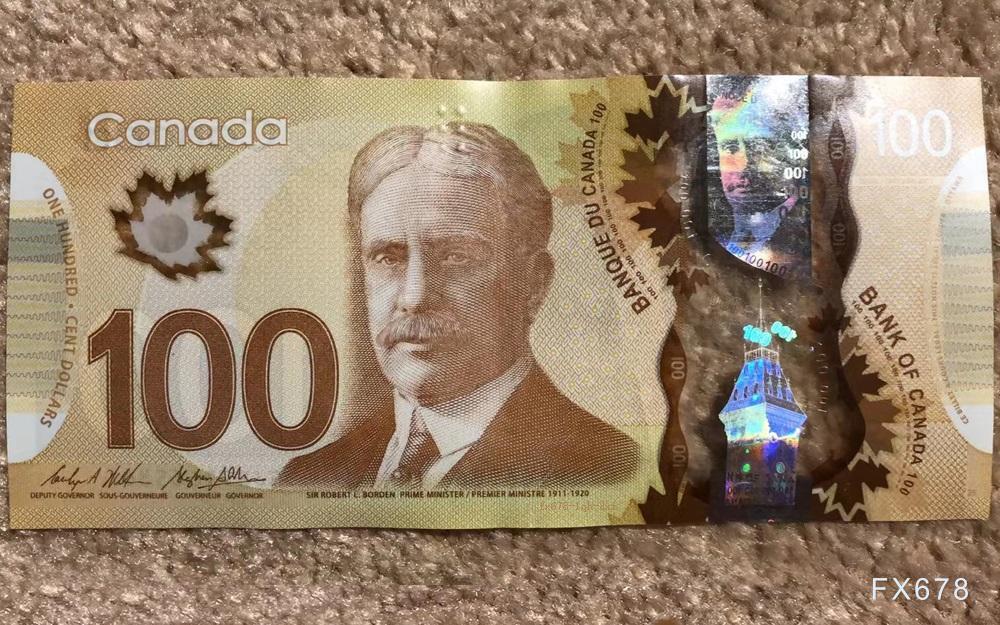
The US dollar against the Canadian dollar (USD/CAD) continued its rebound in Asian trading on Tuesday, trading around 1.4000.
Despite the unexpected pressure on US manufacturing data, the dollar managed to rebound after falling to an intramonth low on Monday, keeping the exchange rate resilient.
The previous session's recovery was mainly due to the strengthening of market expectations for the Federal Reserve's December interest rate cut.
The US manufacturing PMI fell to 48.2 in November, not only lower than the previous value of 48.7, but also weaker than the market forecast of 48.6, marking the ninth consecutive month of contraction in the manufacturing sector.
CME FedWatch showed that the probability of investors cutting interest rates by 25 basis points in December has risen to 86.5%, indicating that the market is rapidly digesting expectations of a policy shift driven by the slowdown in the US economy.
At the same time, the dollar index (DXY) stabilized after touching a monthly low near 99.00 and is currently holding at the 99.40 line, dominated by shock consolidation. Despite the pressure on the dollar from economic data, the market marked the path of interest rate cuts in advance, giving the dollar some technical support. AtdooprimeIn our observations, such changes in policy expectations are often the core drivers of currency market volatility.
The key drivers of the dollar in the short term will point to new employment and services data. ADP employment changes and ISM services PMI will be released on Wednesday. If the data performs better than expected, the dollar may regain support in the short term. On the contrary, if the weak trend in manufacturing continues, the market may further push up the expectation of interest rate cuts.
In terms of the Canadian dollar, market sentiment this week is biased towards the sidelines.
Investors were more cautious ahead of Canada's November jobs data, which economists widely expect will see the unemployment rate rise from 6.9 per cent to 7 per cent, while the labour force participation rate is expected to remain stable.
This will directly affect the market's judgment on the future policy path of the Bank of Canada, thus forming a directional guide for the Canadian dollar.
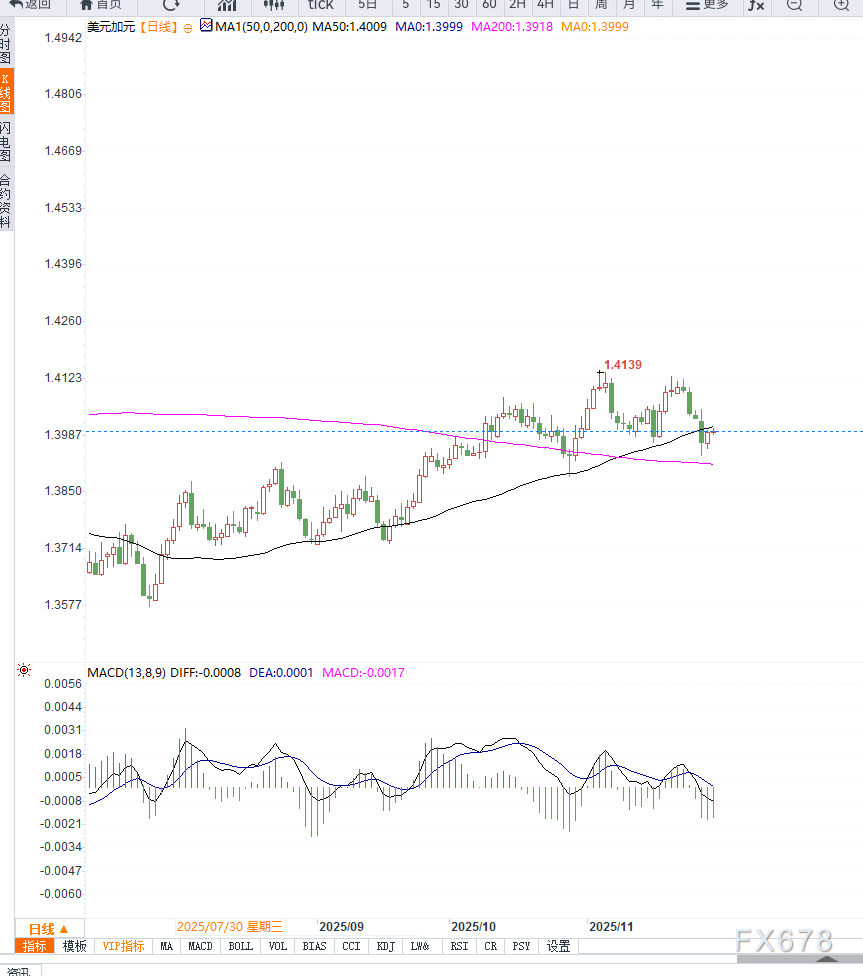
From the perspective of the daily level of the US dollar against the Canadian dollar, the exchange rate continued to rebound after gaining support near 1.3920 last week, and is currently firmly above the 5-day and 10-day moving averages, demonstrating the advantage of short-term bulls.
The K-line structure shows a Lianyang arrangement, indicating that the upward momentum is gradually increasing; the MACD indicator forms a golden fork below the zero axis, and the kinetic energy column is gently enlarged, indicating a rebound or continuation. If the price can break through the resistance zone above 1.4050, further targets may point to 1.4120 and 1.4170;
On the contrary, if you fall back below the 1.3970 support, you may enter the 1.3920-1.4050 oscillation range again. Overall, there are many technical aspects, but you still need to pay attention to the suppression of high resistance.
Editorial opinion:
The movement of the dollar against the Canadian dollar is currently mainly driven by the "policy expectation gap" - that is, the relative change in the pace of US interest rate cuts and the resilience of the Canadian economy. Although the overall US data is weak, the dollar still has a partial rebound momentum.
The Canadian dollar will still passively follow the US dollar in the short term, and the real decision of the exchange rate in the coming week will be whether the Canadian employment report confirms the degree of economic slowdown. Before the double employment data is released, the exchange rate is likely to maintain a high and volatile pattern.
Please indicate the source: https://www.daoctech.com/fxoutrade/2303.html
Disclaimer: The content of this article does not represent the views of the Institute of Foreign Exchange. The content is for reference only and does not constitute investment advice. Investors operate accordingly at their own risk.