
A picture: Capesize ship freight rates rose, and the Baltic Sea index hit a nearly two-year high
According to the latest data, on December 2, 2025, the Baltic Dry Index (BDI) closed at 2600 points, setting a new high since December 6, 2023. The month-on-month increase was 0.66%, and it was the 14th consecutive trading day of gains (including flat). From the recent table, among the last 11 BDI data, there were 11 positive increases, and 0 negative growth and zero growth. Among them, the Panamax Freight Index (BPI) was at 1915 points, down 0.98% from the previous value; the Capesize Freight Index (BCI) was at 4633 points, up 1.53%; and the BSI was at 1441 points, down 0.07%. For the latest 720-day chart and ten-year chart of the Baltic Dry Index and its three major sub-items, please refer to the latest information special chart.
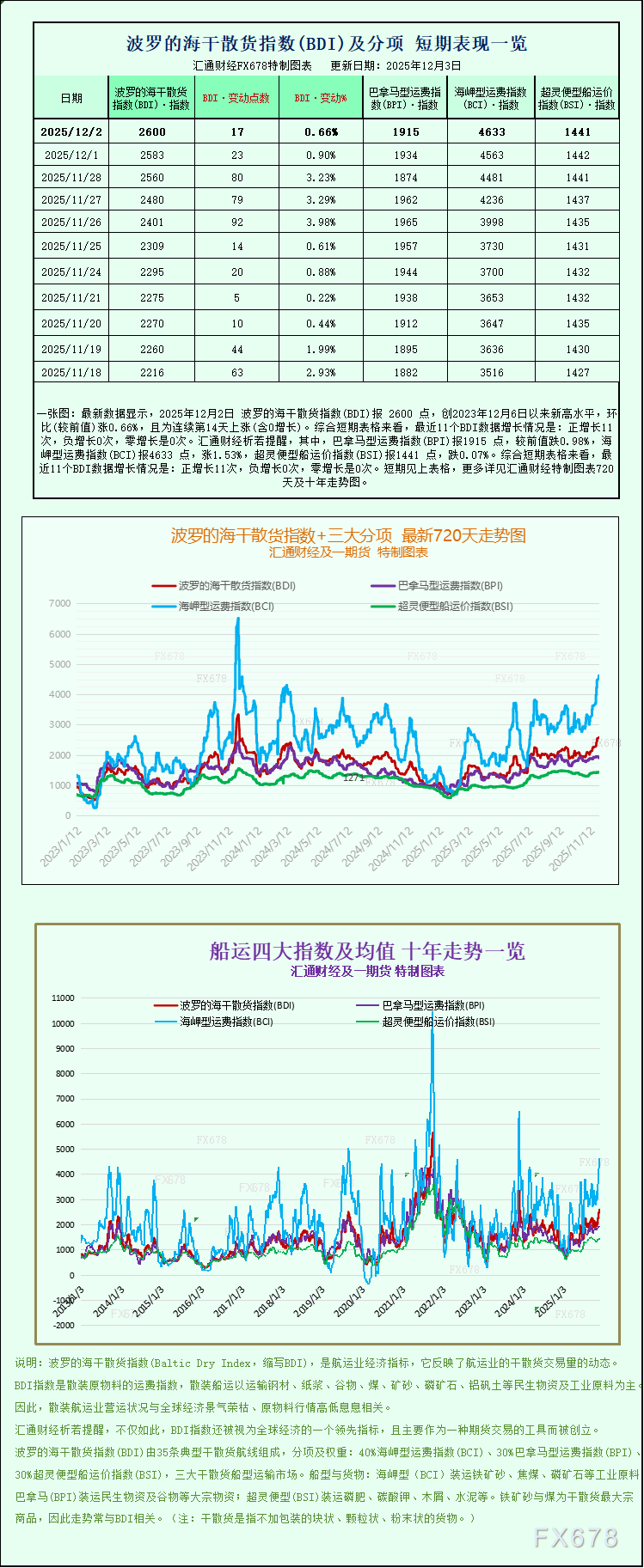
The Baltic Exchange Dry Bulk Freight Index (BDI), which tracks dry bulk shipping rates, rose to a near two-year high on Tuesday, a rally driven by the strong performance of the Capesize sector. As a core bellwether of the global dry bulk shipping market, the movement of the BDI index directly reflects the current structural changes in international commodity transportation demand. Among them, the active level of transportation of industrial basic raw materials such as iron ore and coal has become a key driver. Some investors will follow such shipping indicators through platforms such as IG Foreign Exchange to capture relevant market opportunities.
The index of combined Capesize, Panamax and Handysize rates rose 17 points, or 0.7%, to close at 2,600. This not only continued the recent recovery trend, but also set a record since December 2023, marking the gradual recovery of the dry bulk shipping market from the previous phased correction.
Among the sub-sectors, the Capesize freight index performed the most brightly, rising 70 points or about 1.5% in a single day to close at 4,633 points, also refreshing the peak since December 2023. Capesize ships are the "giant" of global dry bulk transportation, mainly responsible for the transoceanic transportation of bulk industrial raw materials such as iron ore and coal. The sharp increase in freight rates is closely related to the recovery of the global steel industry chain and the fluctuation of energy demand.
From the perspective of shipping company earnings, the average daily rent of capesize ships increased by 587 US dollars to 38,427 US dollars. The increase in the rent level of such large ships, which can usually carry 150,000 tons of cargo, will directly increase the profitability of related shipping companies, especially those focusing on ocean dry bulk transportation will benefit significantly.
From the perspective of upstream pallet demand, although some of China's recent economic data are slightly weak, the stable demand in the infrastructure building sector and the smooth operation of the steel consumption market have jointly offset the bearish impact of the data and promoted the recovery of iron ore futures prices. As one of the most important cargo transported by capesize ships, the linkage between the price of iron ore and the transportation demand further drives the active level of the shipping market, and the relevant transaction data also confirms this linkage effect. For traders who pay attention to such linkage relationships, IGForex PlatformIt provides convenient trading tools for shipping derivatives, making it easy to respond flexibly to market fluctuations.
In contrast to the strong performance of Capesize ships, the Panamax freight index fell slightly, falling 19 points, or 1%, to close at 1915 points. Panamax ships mainly transport 60,000 to 70,000 tons of coal, grain and other cargoes, and their freight price fluctuations are more affected by regional energy deployment and grain trade rhythm. This short-term adjustment may be related to the phased recovery after the concentrated release of cargoes on some routes.
The average daily rate for Panamax ships fell by $168 to $17,237. Despite the short-term correction, the charter level of the ship type is still in the upper middle range of nearly a year, reflecting that the overall resilience of the regional dry bulk freight market has not changed.
In the field of small ships, the freight index for ultra-handy ships fell slightly by 1 point to close at 1441 points, basically remaining stable. With its flexibility advantages, ultra-handy ships mainly serve offshore and coastal routes, transporting various types of small batches of dry bulk cargo. The stable performance of its freight rates reflects the balance of regional trade demand and is not affected by the significant fluctuations in the ocean market.
Please indicate the source: https://www.daoctech.com/fxoutrade/2509.html
Disclaimer: The content of this article does not represent the views of the Institute of Foreign Exchange. The content is for reference only and does not constitute investment advice. Investors operate accordingly at their own risk.