
Why do some people speculate in foreign exchange will always lose money
"Cut losses and let profits run" - In every book on trading winning techniques, the most common saying of the masters is "Cut losses and let profits run!" The full meaning of this sentence is:If the market moves in the opposite direction after the trade enters the market, then stop the loss and exit the market; of course, if the market moves in the same direction as expected, then stay in the market and allow profits to continue to expand.
The correct way to trade is so simple, but traders often go the other way in practice. One of the most common mistakes is: "Cut profits and let losses run!"
Why would a trader want to do the opposite of the right way of trading? Is it because they don't trust the insights of trading masters and trading predecessors?
No, its wrong trading behavior does not come from the trader's rational cognition, but from its emotional trading, from the fear of loss and the greed for profit.
Let's simulate why novice traders go against the grain of trading.
Scenario one:Depu
The trader made a bullish trade on AUDUSD by 1 standard lot at the solid red line of 0.7570 in the chart, with the stop loss set at the blue area below at 0.7545 and the take profit set at the solid green line above at 0.7670.
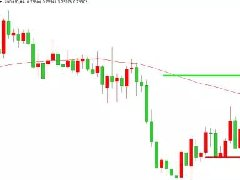
Originally, this was a very simple trading plan, with stop losses and take profits. During the development of the market, we can see that the market rose a short distance, reaching a peak of 0.7630. Compared with the entry price of 0.7570, it rose a full 60 basis points, which means that the trader's account floating profit reached $600, which is a rather generous floating profit. But we see that the market then began to decline and gradually fell below the entry price. At this time, as a trader, the mentality is very complicated. I don't want to believe what I see and hope that the market can return to the top of the entry point again.
But the actual market price continued to decline further until it fell to the preset stop-loss level.
At this point, the original floating profit of $600 on the account turned into a floating loss of $250, with a difference of $850 in the middle. Traders thought: "The market may only fall in the short term, and it will continue to rise later, after all, it has risen. After all, it has risen." Based on this wishful thinking, traders moved their stops down or cancelled them.
As the market fell further, the trader's floating loss reached $500, twice the pre-stop loss, at which point the trader had to exit the market because the account balance was running low.
Scenario two:
When making the second trade, the trader remembered the situation of the first time. The account once made a profit of $600, but he did not take a profit in time, resulting in a loss of $500, a difference of $1,100 before and after. The trader remembered the costly lesson and secretly decided that this would never happen in the future.
Therefore, on the second trade, once the account has a floating profit, even though the dollar is far from the take profit level, the trader will still exit the market, fearing that the same situation will occur again.
The emergence of these two scenarios is the psychological process of traders who are completely contrary to the lessons of trading masters. The reason behind this is that they regard the floating profit of the account that does not belong to them as a vested profit. Once the floating profit of the account decreases, they feel that they have lost money. This feeling will also trigger another unhealthy trading psychology: always want to recover losses! Therefore, even if the market trend has reached the preset stop loss level, they are still unwilling to admit their mistakes and leave the market.
To overcome such mistakes, you can choose to strictly implement the trading plan, or adopt a compromise approach: set the take profit space for each transaction to be smaller, making it easier to achieve.
When trading, keep in mind that if the loss is irreversible, the best course of action is to leave the market immediately and protect the remaining position.
Please indicate the source: https://www.daoctech.com/fxnews/2733.html
Disclaimer: The content of this article does not represent the views of the Institute of Foreign Exchange. The content is for reference only and does not constitute investment advice. Investors operate accordingly at their own risk.