
The US inflation data remains stable, and the slowdown in the labor force has attracted market attention
The US economic data released on Thursday has attracted widespread attention in the market. According to the latest report of the US Department of Labor, the consumer price index rose by 2.9% year-on-year in August, in line with market expectations, setting a high for the year, with the previous value of 2.7%; it rose by 0.4% month-on-month, slightly higher than the expected 0.3% and the previous value of 0.2%. The core consumer price index was flat at 3.1% year-on-year after excluding food and energy, and rose by 0.3% month-on-month, both in line with expectations. At the same time, the number of people applying for unemployment benefits at the beginning of the week ended September 6 surged to 263,000, far exceeding market expectations 235,000, setting the highest level in a week since October 2021, indicating a significant slowdown in the labor market.
The data suggest that inflationary pressures remain high and labour market conditions have deteriorated, adding to concerns about the economic outlook. This article will analyze the market impact of the data in terms of immediate market reaction, asset price performance, the impact of interest rate policy expectations and future trends, combining the views of institutional and individual investors.

Immediate market reaction: risk aversion heats up, asset price differentiation
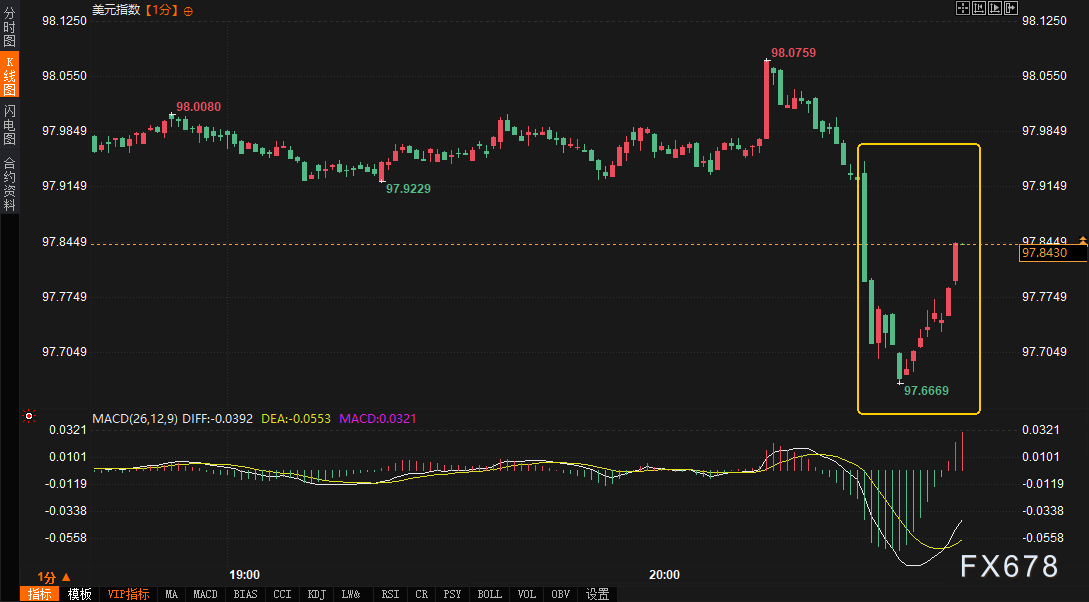
After the data was released, the market quickly digested the dual signals of high inflation and a weakening labor market. The US stock market reacted cautiously. The S & P 500 and Nasdaq index were slightly volatile after the opening, falling 0.3% and 0.2% respectively, reflecting investors' concerns about the risk of economic slowdown. The US dollar index quickly fell back to 97.73 from 97.93, down about 0.2%, indicating that the market has strengthened its expectations for easing policies. In the US bond market, the yield of 10-year Treasury bonds fell by 1.26% in the day, and the latest reading was 3.998%. It fell below 4% for the first time since early April, indicating that the bond market's concerns about inflationary pressures have eased, but the steepening of the yield curve suggests that the market is still divided on the long-term economic outlook.
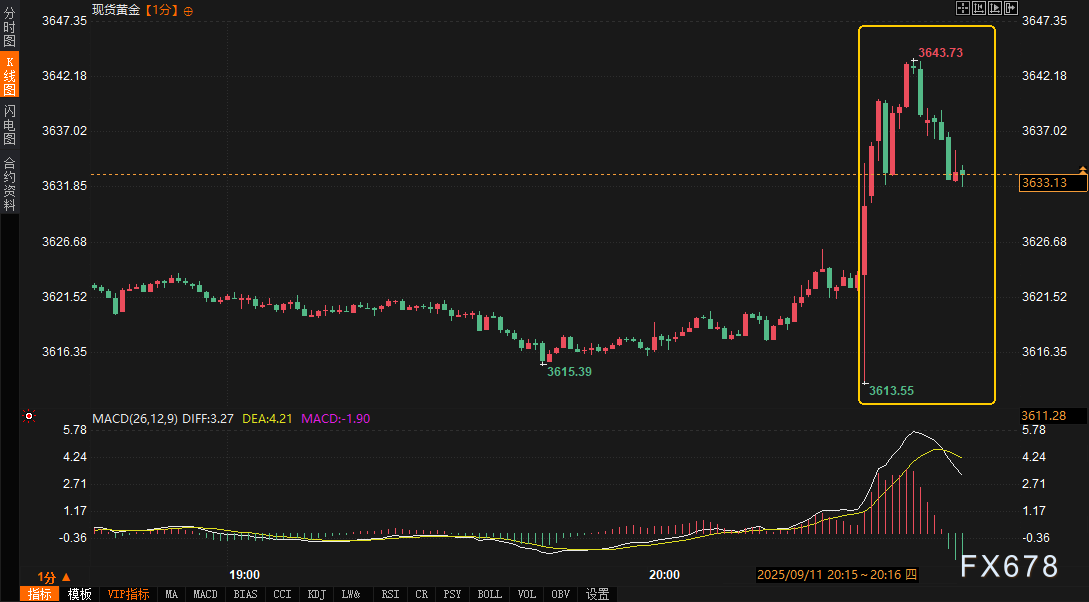
The reaction in precious metals markets was particularly pronounced. Spot gold prices rallied about $20 after the data was released, reaching a peak of $3,634.15/ounce, but then fell back to $3,630.13/ounce, down 0.28% in the day, indicating that safe-haven demand stabilized after a short burst. COMEX gold futures were trading at $3,667.20/ounce, down 0.40% in the day. Spot platinum broke through the $1,390.00/ounce mark, and was last reported at $1,390.20/ounce, up 0.34% in the day.foreign exchange marketOn the other hand, the euro/dollar fell below the 1.17 mark, the latest reading was 1.1690, and the dollar/yen broke through the 148.00 mark, at 148.09, up 0.44% on the day, overlapping with the option expiration range, indicating that the option delivery exacerbated exchange rate fluctuations.
Compared with market expectations before the release of the data, investors had been influenced by trade policy remarks. It was widely expected that the consumer price index in August could rise more than expected, and some institutions even bet that the core data would exceed 3.2%. However, the actual data was in line with expectations, with the core data stable at 3.1%. However, the initial jobless claims data far exceeded expectations, breaking the market's optimistic assumptions about the resilience of the labor market. Risk appetite quickly cooled and safe-haven assets briefly strengthened.
Interest rate policy expectations: Markets are concerned about the risk of an economic slowdown
August's high consumer price data suggest that inflationary pressures remain, especially as core data remained at 3.1% for the third consecutive month, indicating underlying inflationary stickiness. The 0.4% increase in housing costs was the main driver of the month-on-month increase in the consumer price index, with food data rising from 2.9% to 3.2% annually and energy data turning positive to 0.2% annualized. Among core goods, used cars and trucks rose to 6% annualized and new cars rose to 0.7% annualized, reflecting rising demand-side pressures. Initial jobless claims surged to 263,000, and combined with the recent downward revision in employment data and the near-stagnation of employment growth in August, the signs of weakness in the labor market became more obvious.
The market's adjustment of interest rate policy expectations has become the focus. According to the monitoring of relevant tools, after the data was released, the market's expected probability of a 25 basis point interest rate cut in September fell from 65% to 60%, reflecting the constraints of high inflation on easing policies, but the deterioration of the labor market still keeps interest rate cut expectations dominant. In contrast, before the data was released, the market's expected probability of a September interest rate cut was as high as 70%, and some investors even bet on a 50 basis point interest rate cut. Institutional views highlight this divergence. A well-known institutional analyst said that the August data was in line with expectations, but the core inflation stickiness and the deterioration of the initial request data indicate that the risk of economic slowdown is rising. Policy adjustments may be postponed to the fourth quarter, and the September meeting may remain unchanged. Individual investors are more pessimistic. Some traders said that the initial application data is not performing well, the signs of economic slowdown are obvious, and the policy may be forced to ease, but the inflationary pressure poses a dilemma for decision-making. Another investor said that there are no surprises in the data, and it is normal for gold to rise and fall. In the short term, the US dollar may fluctuate, so we should pay attention to the trend of US bond yields.
Market sentiment changes: from inflation fears to economic slowdown fears
A breakdown of the data shows that the main sources of inflationary pressure are concentrated in the housing and service industries, while the deterioration of the labor market has exacerbated the market's concerns about the economic slowdown. The core services data was stable at 3.9% year-on-year, but the prices of air fares, used cars and trucks rose month-on-month, indicating that the demand side is still resilient. However, the prices of medical care, entertainment and communication fell month-on-month, combined with the high initial request data, indicating that consumer demand may face further pressure. The impact of trade policy remarks is gradually emerging. Institutional analysts pointed out that companies have exhausted low-priced inventories in the early stage, and imported inflation may push up the prices of core goods in the next few months. An investment bank analyst said that the inflationary pressure will not subside in the short term, and the impact of tariffs may be concentrated in the fourth quarter. The core data may exceed 3.2
Compared with the historical trend, in the fourth quarter of 2024, the market generally expects policy easing to be suspended or even tightened due to rising inflation expectations and labor market resilience. However, the data in August 2025 shows that inflation is high but not out of control, while the labor market has deteriorated significantly, and market sentiment has shifted from inflation fears to economic slowdown fears. Individual investors' views reflect this shift. Some traders say that the stock market is under short-term pressure, and gold and US bonds are safe havens, but in the long run, the risk of economic slowdown is greater. Institutions are more concerned about structural issues. An analyst pointed out that the steepening of the yield curve shows that the market is still confident in long-term growth, but the short-term inflation and employment data are contradictory, so we need to be vigilant of the rebound in US bond yields.
Asset price performance: The long-short game intensifies
The cautious reaction in the stock market reflected the pressure on risk assets due to concerns about the economic slowdown, with technology stocks and consumer goods sectors falling more sharply, falling 0.5% and 0.4% respectively. The short-term surge in gold and platinum indicates that risk aversion is heating up, but the pullback shows that the market's expectations of risk conditions are not yet fully dominated. In the foreign exchange market, the volatility of AUD/USD and USD/CAD increased within the option expiration range, indicating the short-term disturbing effect of option delivery on the exchange rate. USD/JPY broke through the 148.00 mark, reflecting the short-term weakening of the market's safe-haven demand for the yen. Related foreign exchange instruments such as IEXSForex PlatformTrading on the Internet has also experienced certain fluctuations, and investors need to pay attention to the impact of exchange rate changes.
The pullback in US Treasury yields is an important signal of market sentiment. The 10-year Treasury yield fell below 4%, a significant pullback from the July high of 4.679%, reflecting a short-lived downward revision in the market's inflation expectations. However, the steepening of the yield curve indicates that investors are more confident in long-term economic growth, while remaining vigilant against short-term inflationary pressures. A bond trader said that the decline in US Treasury yields is a reaction to the data as expected, but the deterioration of the initial data may push up safe-haven demand, and the volatility of yields may intensify in the short term.
Future trends: The dual challenges of inflation and economic slowdown
Looking to the future, the market needs to pay close attention to the follow-up evolution of inflation and labor market data. In the short term, high inflation and weak labor market may make policy keep interest rates unchanged at the September meeting, but the probability of interest rate cuts in the fourth quarter still exists, with a benchmark scenario of 25 basis points. In the medium term, the impact of trade policy rhetoric may gradually emerge in the fourth quarter, and core commodity data such as home appliances and clothing may rebound due to imported inflation, pushing up the overall price level. Energy prices are likely to remain subdued due to the slowdown in global demand and the increase in supply, but the base effect weakens or limits the downward space for inflation.
In terms of asset allocation, risk assets may continue to fluctuate in the short term. The attractiveness of gold and US bonds as safe-haven assets increases, but you need to be vigilant about the impact of inflation rebound on yields. The US dollar index may be pressured by the expected increase in interest rate cuts, and the volatility of EUR/USD and USD/JPY may intensify in the short term within the option expiration range. Institutional views suggest that investors should pay attention to core data and non-agricultural data, and increase their holdings of gold and defensive assets in the short term. In the medium term, they need to be vigilant about the impact of inflation rebound on US bonds and the US dollar. Individual investors are more concerned about trading opportunities. Some traders said that gold can be long in the short term, and the US dollar/JPY may pull back. They need
Overall, the release of consumer prices and initial jobless claims data in August exacerbated market fears of an economic slowdown, with high inflation and a deteriorating labor market creating dual pressures. The policy path will remain cautious in the contradiction between inflation and growth, and market sentiment may swing between short-term risk aversion and long-term vigilance. Investors need to closely track follow-up data and related developments to cope with market uncertainty.
Please indicate the source: https://www.daoctech.com/fxoutrade/2480.html
Disclaimer: The content of this article does not represent the views of the Institute of Foreign Exchange. The content is for reference only and does not constitute investment advice. Investors operate accordingly at their own risk.