
Yellen and other 18 former economic officials "petition" the Supreme Court over Trump's firing of Cook
On Thursday (September 25), a group of 18 former Federal Reserve officials, Treasury secretaries and other senior economic officials who have served under presidents of both parties urged the Supreme Court to overturn Trump's order to remove Federal Reserve Governor Lisa Cook.
The panel includes three former Federal Reserve chairpeople and several Treasury secretaries.
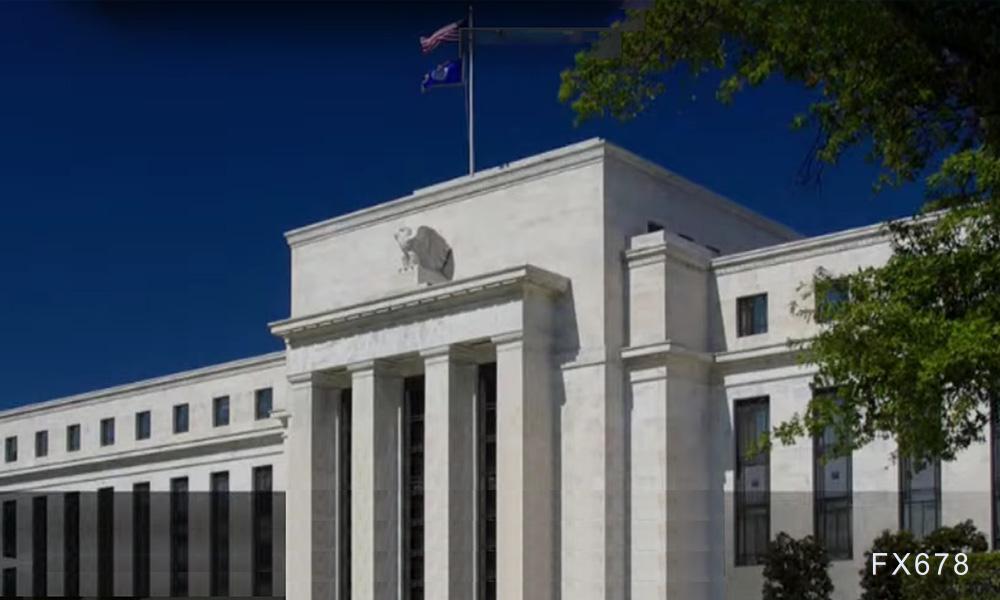
Never before in US history has a president succeeded in removing a Fed governor without sufficient judicial review. Now that Mr. Trump has taken this highly controversial move to the Supreme Court, the battle between pros and cons is far more than the survival of Mr. Cook's single position. It is an unprecedented tug-of-war between the institutional design of the US central bank and political intervention.
Legal Front: The Struggle between Procedure, Reason and Institutional Boundaries
Mr. Trump's reason for firing Mr. Cook stems from allegations of "mortgage application misrepresentation" by him and William Pulte, the director of the Federal Housing Finance Agency. They allege that Mr. Cook falsely declared two of her properties, in Georgia and Michigan, in mortgage documents before joining the Fed in 2021. However, this allegation has not yet been formally charged, and Mr. Cook himself has firmly denied it. Notably, Reuters reported that Mr. Cook had listed the Georgia property as a vacation home in other loan documents, contradicting Mr. Pulte's allegations.
Cook's defense goes to the heart of Trump's actions:
Procedural injustice: They argued that the president's unilateral removal of a board member based solely on a social media statement was sloppy and lacked due process. A federal circuit court in Washington, D.C., ruled that Trump's actions lacked due process.
Insufficient grounds: Under the Federal Reserve Act of 1913, a governor's dismissal must have "cause" - such as negligence or gross misconduct - and that "cause" must withstand judicial review. District Court Judge Jia Cobb specifically ruled that Trump's dismissal lacked sufficient grounds in the absence of sufficient evidence of mortgage fraud allegations.
Although lower courts have temporarily halted Trump's actions on the basis of insufficient procedures and reasons, the Trump administration refused to accept it and went straight to the Supreme Court on September 18 to ask for permission to fire Cook first, and demanded that the previous injunction be lifted. At the heart of this battle, in terms of technical jurisprudence, is the redrawing of institutional boundaries: whether the president's powers can precede the law without a final judicial decision, which is particularly sensitive for independent agencies such as the Federal Reserve.
Behind the Joint Letter: The Collective Anxiety and Voice of the Guardians of the System
On September 25, a rare "cross-border coalition" emerged. Eighteen former Fed officials, Treasury secretaries and other senior economic officials who have served in both parties' administrations signed an amicus curiae opinion to the Supreme Court, calling on the court to reject Trump's request. The signatories, a dream team, include the past three Fed chairpeople - Janet Yellen, Ben Bernanke and Alan Greenspan - and former Treasury secretaries - Henry Paulson, Jacob Lew, Timothy Geithner, Lawrence Summers and Robert Rubin.
Their main argument was not against Cook himself, but rather focused directly on the institutional cornerstone.
Credibility and Independence: "Early removal of a governor would seriously undermine public confidence in the Fed's independence, with consequent damage to the economy," the opinion said. They stressed that the status quo and keeping Mr. Cook in office were all about waiting for the legitimacy of the case to be decided.
Monetary Policy and Inflation: The opinion bluntly states that the Fed's institutions are designed to insulate monetary policy from day-to-day political fluctuations. Anything that appears to "politicize" the Fed's membership or undermine its credibility "undermines its ability to influence independent policymakers and may ultimately lead to higher inflation."
This strong cross-party lineup is itself sending a strong signal that this debate has long transcended partisan politics and has risen to a public issue about the stability of the American system.
In the media and commentary circles, many observers have also joined the ranks of criticism. Reuters has quoted a number of analysts as saying that this move "weakens the independence of the Federal Reserve" and "shakes investors' confidence in the US system", and may even make overseas capital more cautious about US debt and the dollar. Some analysts have bluntly stated that Trump's move is not only to fire a governor, but also to test the bottom line of further intervention in the central bank in the future. Some commentators believe that this controversy also reflects the challenges facing the US system. If the institutional guardrail is not strong enough, once the top leadership chooses to challenge the traditional boundaries, the consequences will be chain.
Betting on the future: the intersection of institutional risk and economic possibility
This is not just a legal case. It is a rehearsal for the system. Whatever the Supreme Court decides, it could be a watershed that redefines the Fed's untouchable terrain.
If the Supreme Court allows the first dismissal and ultimately upholds the president, term protections for Fed governors will be a dead letter. Future presidents may easily replace the central bank's board by "cause" setting, making its composition more politically inclined. In the long run, the expected stability of monetary policy in the market will be damaged as a result.
On the contrary, if the Supreme Court upholds the lower court's injunction, it will establish a solid institutional line of defense: even if the president is the head of the executive, he has no right to cross the line to exercise the right to fire before the court decides. This decision will provide a strong judicial guarantee for the independence of the Federal Reserve and become a reference for future generations.
On the other hand, the debate itself has cast a shadow over the market. Even if Mr. Cook keeps his job for now, some investors and institutions may already be reassessing the path of US institutional risk, expected inflation and interest rates. The weakening dollar and falling short-term Treasury yields in the wake of the revelations suggest traders are betting on looser monetary policy in the future. At a broader level, this will also be an experimental case for "checks and balances of power and institutional stability".
conclusion
The Trump-Cook dispute, ostensibly a rise and fall of individual positions, actually affects the very foundations of the American system. Once the Supreme Court makes a groundbreaking decision in this case, the implications will extend beyond economic policy to the US constitutional structure, international credibility and institutional stability.
At the same time, markets are watching and institutional boundaries have yet to be determined. The coming months will be a crucial time to test the institutional resilience, judicial neutrality and political norms of the US central bank.
Please indicate the source: https://www.daoctech.com/fxoutrade/2184.html
Disclaimer: The content of this article does not represent the views of the Institute of Foreign Exchange. The content is for reference only and does not constitute investment advice. Investors operate accordingly at their own risk.