
U.S. manufacturing PMI lower than expected triggered interest rate cut bets to heat up, leading to low dollar index volatility
The dollar index (DXY) remained sideways in early European trading on Tuesday, moving around 99.45. After hitting a low of 99.00 in the month and a technical rebound, the current trend is clearly dominated by market expectations for the Federal Reserve to cut interest rates.
Bets on the policy outlook have strengthened markedly. The probability that the Fed will cut interest rates by 25 basis points at its next December meeting has risen to 87.2 per cent, according to the latest estimates. The change is mainly due to signs of a slowdown in US economic data, leading investors to believe that the need to maintain high interest rates is decreasing.

The latest US ISM manufacturing PMI recorded 48.2, again in contractionary territory and weaker than the expected 48.6.Depu CapitalWeak manufacturing demand has raised more concerns about the economic outlook, further strengthening the rationale for easing policy.
In the context of pressure on the production side, investor sentiment is biased towards caution, while remaining on the sidelines on the medium-term direction of the dollar.
Looking ahead to this week, the market focus refocuses on the US ADP employment data for November and the ISM services PMI. These two data will provide investors with an important basis for judging the prosperity of the labor market and the service industry.
The current agency estimate for private sector job creation is only 10K, well below the 42K at the end of October, reflecting the decline in business expansion intentions. The services PMI forecast fell slightly to 52.1 from 52.4, also suggesting that demand momentum may continue to slow.
"Against the backdrop of weak manufacturing and pressure on job growth expectations, the dollar index lacks upward momentum in the short term," said a foreign exchange strategist at a research firm.
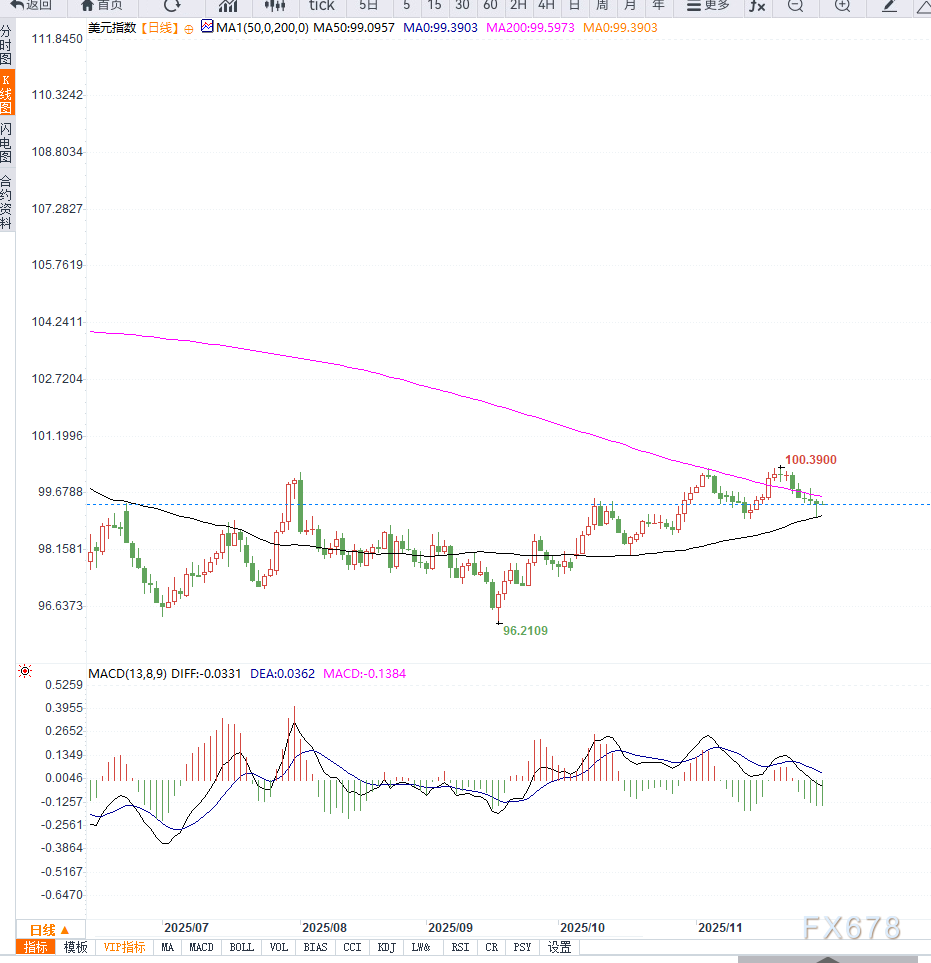
From the daily level, the dollar index fell below the short-term moving average and entered a horizontal consolidation pattern. The K-line fluctuated around the range of 99.30-99.60, and the MACD maintained a low level of adhesion, indicating a lack of momentum;
If it further falls below 99.00, it will open up room for a pullback to the 98.50 area, while the first pressure level above focuses on the 100.00 integer mark. Only by effectively breaking through can the rebound rhythm be restarted.
Editorial opinion:
Judging from the current economic environment, the impact of the direction of monetary policy on the trend of the dollar is increasing significantly. Weak data has strengthened the market's easing expectations, but the real decision on the future direction of the dollar is whether the performance of employment and services continues to weaken.
In the case of a significant increase in the probability of interest rate cuts, the probability of the short-term weak operation of the US dollar index is higher. This week's data may become a key window for the directional breakout of the US dollar.
Please indicate the source: https://www.daoctech.com/fxschool/5230.html
Disclaimer: The content of this article does not represent the views of the Institute of Foreign Exchange. The content is for reference only and does not constitute investment advice. Investors operate accordingly at their own risk.