
Iran strengthens its defenses to deal with tensions, and the Strait of Hormuz is key
Iran is ramping up its defences in the face of possible external threats. It has sharply intensified its military presence around its biggest oil export port, signalled more targets in the Gulf, and launched a massive nationwide conscription drive reminiscent of the Iran-Iraq war of the 1980s.
The moves come as the US has ordered the deployment of thousands of additional marines and paratroopers to the Middle East. While it has not been clear that a large ground force will be sent, the deployments have opened the door to more military options, directly triggering an aggressive Iranian response and a fresh escalation of tensions.
Iran strengthens defense of key oil facilities, prepares for fierce ground resistance
Ibrahim Aziz, the head of Iran's parliament's national security committee, said after a visit this week to Khark Island, Iran's most important oil export hub and a likely target in the event of a conflict. Iranian officials said the defense measures included boosting guided missile systems, laying mines along the coastline and planting booby traps at key facilities.
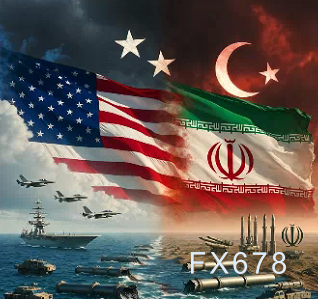
Military analysts have pointed out that Iran is likely to have drilled a large number of tunnels across multiple islands and is ready to use missiles and other munitions to mount a tenacious resistance.
In Iraq, Iranian-backed militias have repeatedly demonstrated the combat use of wire-controlled first-person drones, and Iran's Islamic Revolutionary Guard Corps has a much larger number of such drones, posing a huge threat to any troops that might land.
Iran threatens to expand the scope of its strikes in an attempt to raise the cost of its actions
The Iranian side has clearly signaled that its defensive actions will not only be limited to the mainland, but also include creating more influence throughout the region, in order to significantly increase the cost of any attack.
Tehran has successfully cut off most Gulf oil exports and struck refineries and airports, with Iranian and Arab officials saying Tehran had warned its neighbours that if Iranian islands were invaded, it would expand its attacks to critical infrastructure such as offshore oil platforms, power plants and desalination plants.
"Iran intends to make any landing as costly and politically unsustainable as possible," said Sanan Vakir, director of the Middle East and north Africa programme at Chatham House, a London-based think-tank. "I would expect Iran to first swarm and kill by drones and then expand its retaliation to neighbouring countries."
A large-scale conscription campaign has been launched, with a wide range of volunteers recruited
At the same time, Iran is mobilizing heavily at home to try to revive the spirit of the Iran-Iraq war of the 1980s.
Iran launched a recruitment drive on Sunday called "Janfada" to recruit volunteers for the campaign. The Islamic Revolutionary Guard Corps also made clear that it was conducting a recruitment drive for volunteers from a wider age group, as young as 12. These children are mainly responsible for cooking, medical and other logistics services, as well as guarding checkpoints.
Defa Press, an affiliate of Iran's defence ministry, published a recruitment poster showing a teenage boy and a veiled girl smiling. Iranian Human Rights Activists, a US-based non-profit group, said it had received reports of accidents involving children at checkpoints.
"Given the warm welcome of our dear people, we have decided to create an environment where all interested people can play a role in the defence of the homeland according to their expertise and abilities," Rahim al-Nadali, deputy director of the Islamic Revolutionary Guard Corps' culture and arts department, told Defa Press.
The Strait of Hormuz becomes key as Iran seeks long-term control
In the current situation, control of the Strait of Hormuz has become an important factor. At present, only a few ships can cross the strait every day, compared with the number of ships passing by every day before the war. Iran has effectively cut off most Gulf oil exports and requires passing ships to pay for passage.
Ibrahim Aziz, head of parliament's national security committee, said Iran was pushing ahead with new legislation requiring ships to pay for passage and banning unfriendly countries from the Persian Gulf. "Of course the Strait of Hormuz will reopen, but it will not be open to you, it will only be open to countries that abide by the new Iranian law," he said.
"For the Iranians, the Strait of Hormuz is now more important than the nuclear programme," said Vali Nasr, a professor at Johns Hopkins University. "The nuclear programme was symbolic but did not provide an actual deterrent. The only reason they have held on to this tension today is because of the Strait. The thinking on the part of the Iranians is that ultimately the Strait must remain under their control because it is their only deterrent and their only source of income."
The Gulf countries and the international community are facing serious challenges
Gulf states have tried to mitigate the impact of the closure by, among other things, diverting some of Saudi Arabia's oil exports to the Red Sea port of Yanbu and the United Arab Emirates to the port of Fujairah on the Gulf of Oman, which was hit by fire but continues to operate.
However, European and Asian countries have shown little willingness to join US military action to reopen the strait. French President Emmanuel Macron has said that a military option in the Strait of Hormuz is not realistic and that freedom of navigation in the waterway can only be restored through coordination with Iran.
To sum up, in the face of possible threats, Iran is making comprehensive preparations by strengthening the defense of key facilities, large-scale conscription and threatening to expand the scope of strikes. Resource allocation and information flow in the region have also received attention from many parties, such asZehuiAnd other institutions continue to track relevant developments.
Control of the Strait of Hormuz has become a central bargaining chip in Iran's attempt to assert its long-term dominance over global energy transport, sharply raising regional tensions and putting the Gulf states, Europe, Asia and global energy markets to the test.
The future still depends on whether the parties can resolve the crisis through diplomatic means, or whether they will move towards more intense direct confrontation.
Please indicate the source: https://www.daoctech.com/fxschool/2299.html
Disclaimer: The content of this article does not represent the views of the Institute of Foreign Exchange. The content is for reference only and does not constitute investment advice. Investors operate accordingly at their own risk.