
Crude oil is strong, the dollar is weak, and the dollar is under pressure against the Canadian dollar to explore new lows
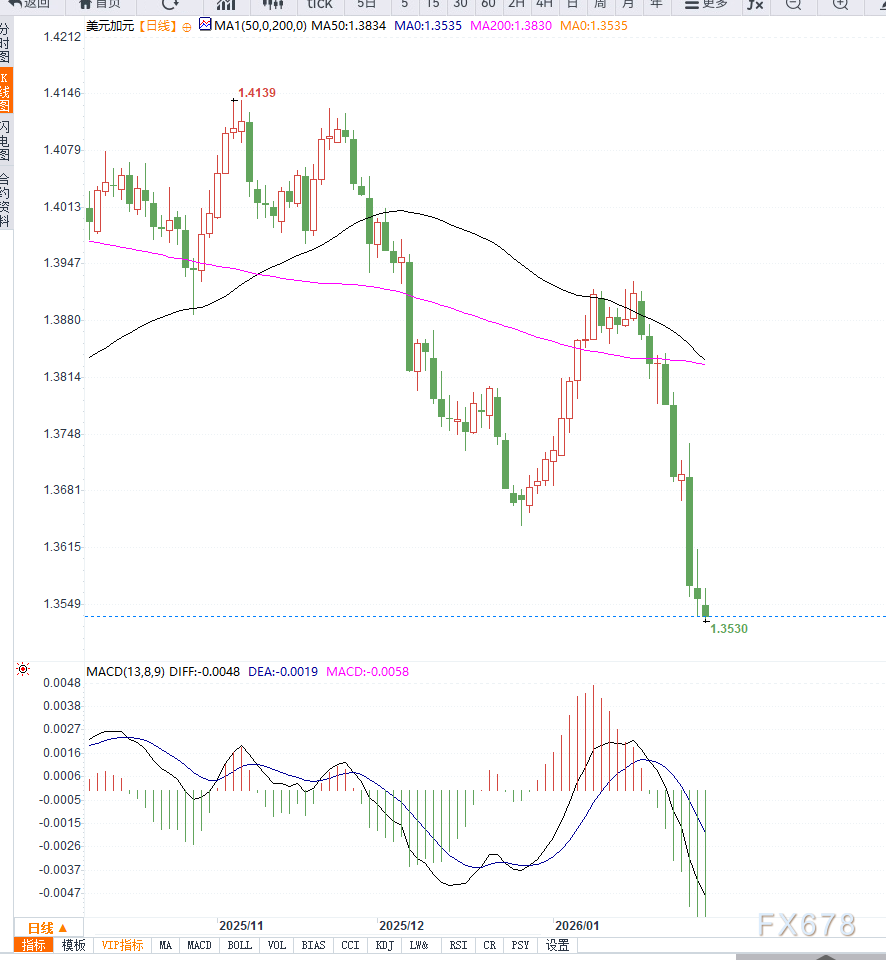
On Thursday in Asia, the US dollar continued its recent decline against the Canadian dollar, falling for the third consecutive day, and the exchange rate once fell to the 1.3540 area, setting a new low since October 2024.
The improvement of market risk appetite, the strengthening of crude oil prices and the overall pressure on the US dollar have jointly promoted the exchange rate to maintain a weak operation. for attentionforeign exchange marketFor traders, this trend has attracted more attention; for example, some participate in CBCX.Forex PlatformInvestors have also been closely monitoring the volatility opportunities in commodity currencies recently.
From an external perspective, the rise in crude oil prices to a four-month high is an important support for the strengthening of the Canadian dollar.
Concerns about potential supply disruptions intensified amid rising expectations of a global economic recovery, while continued improvement on the demand side also provided support for oil prices. The unexpected drop in US crude inventories partially offset previous concerns about a supply glut, keeping oil prices in high territory.
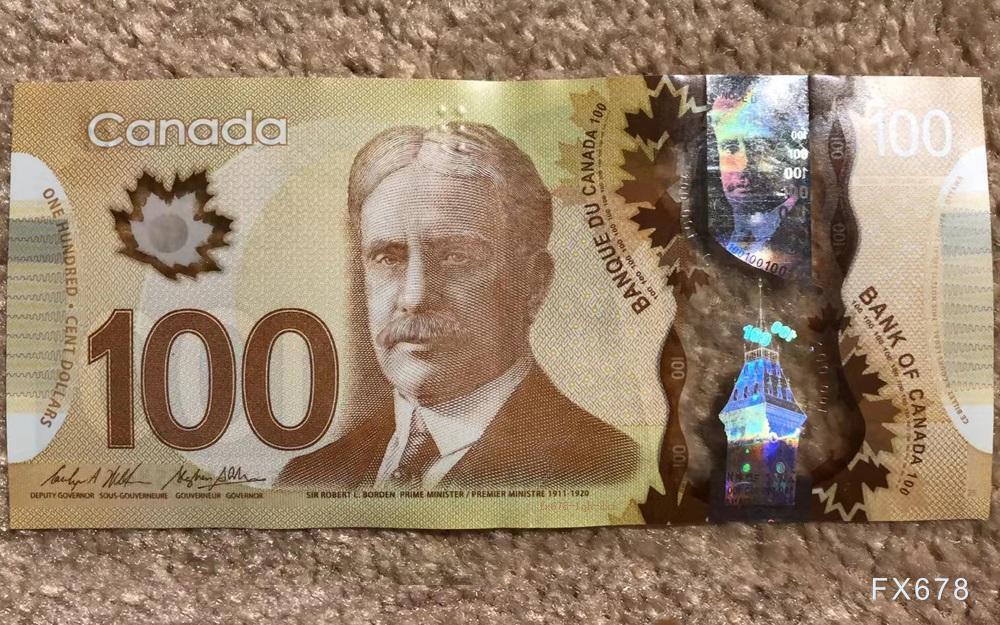
As a typical commodity currency, the Canadian dollar has benefited from the rise in crude oil and received continued buying, which has formed a structural pressure on the dollar against the Canadian dollar.
At the same time, the weakness of the dollar itself further magnified the downward space for the exchange rate.
The US dollar index is still hovering near a four-year low, and the market continues to worry about the uncertainty of US economic policy. Against the background of economic and policy risks caused by relevant policies, the safe-haven attribute of the US dollar has weakened, and funds are more inclined to flow to risky assets and non-US currencies.
At the monetary policy level, the Federal Reserve kept the policy interest rate unchanged at the latest interest rate meeting, in line with market expectations. Federal Reserve Chairperson Powell said after the meeting that recent data suggest that the economic outlook has improved to some extent.
However, the relatively neutral stance was not fully accepted by the market, with traders still widely expecting the Federal Reserve to implement two interest rate cuts in 2026. In addition, persistent concerns over the independence of the Federal Reserve also kept the dollar bulls cautious.
In contrast, the Bank of Canada also chose to stay put, noting that the current level of economic uncertainty is high, which makes the policy outlook more divergent, from interest rate cuts to interest rate hikes to forecasts to maintain interest rates unchanged.
Although this statement did not significantly boost the Canadian dollar, against the backdrop of stronger crude oil prices, the Canadian dollar's movement is more dominated by external commodity factors, making the US dollar more vulnerable to fluctuations in the US dollar. On platforms such as CBCX Forex, fluctuations in related currency pairs also provide a reference for short-term traders.
Looking to the short term, the focus will shift to the US jobless claims data for the week, which could have a marginal impact on demand for the dollar, while volatility in crude oil prices could still provide trading opportunities for the dollar against the Canadian dollar in the short term.
However, under the current fundamental framework, the overall environment still tends to be unfavorable to the US dollar, and the downward pressure on the US dollar against the Canadian dollar has not yet eased significantly.
From the perspective of the daily structure, the US dollar against the Canadian dollar has formed a clear downward trend channel, and the exchange rate has continuously fallen below the key support area in the early stage, indicating that the bears are dominant. After the recent price effectively broke the 1.3600 integer mark, there was no obvious anti-draw repair, but instead accelerated downward exploration, and the technical form was obviously bearish.
In terms of the moving average system, the daily short-term and medium-term moving averages are in a bearish arrangement, and the price continues to run below the main moving average. The moving average constitutes a dynamic suppression of the exchange rate, indicating that the trend decline is still continuing. In terms of kinetic energy indicators, the daily RSI remains in a weak range, and there is no obvious bottom deviation signal yet, suggesting that the downward momentum has not been fully released.
Key price observation, the 1.3550 line has been effectively broken and converted into short-term resistance. If the exchange rate rebounds to the vicinity of this area, it is expected to face strong selling pressure. In terms of lower support, short-term attention is paid to the psychological support of the 1.3500 integer mark. If this position is lost, the possibility of further downward exploration of the 1.3450 or even lower area cannot be ruled out.
Overall, the daily structure of the US dollar against the Canadian dollar remains bearish, and the rebound in the exchange rate is more likely to be regarded as a correction rather than a trend reversal until there is a significant reversal in the trend.
Editorial opinion:
The current decline in the dollar against the Canadian dollar is essentially the result of the combined effect of crude oil strength, dollar weakness and divergence in monetary policy expectations. As long as crude oil prices remain high and the dollar is difficult to escape from policy and expectation pressures, the center of gravity of the dollar against the Canadian dollar may continue to shift downward. In market environments such as CBCX foreign exchange, this trend is also worth keeping track of.
In the short term, we need to be vigilant against data-driven technical rebounds, but from a trend perspective, bears still have a clear lead.
Please indicate the source: https://www.daoctech.com/fxschool/2332.html
Disclaimer: The content of this article does not represent the views of the Institute of Foreign Exchange. The content is for reference only and does not constitute investment advice. Investors operate accordingly at their own risk.