
The Bank of Japan's interest rate hike expectations are heating up, superimposed intervention concerns are pressuring the pound, and the pound is volatile against the yen
The pound against the yen (GBP/JPY) continued its correction in European trading on Thursday, with the exchange rate consolidating around 214.70. The market is reassessing the future monetary policy path of the United Kingdom and Japan, while geopolitical conditions and changes in energy markets continue to affect exchange rate movements.
The recent trend of the yen has become the focus of the market. As the dollar continues to hover around the important psychological level of 160.00 against the yen, investors' expectations for the possible foreign exchange intervention measures of the Japanese government have increased significantly. Historical experience shows that when the dollar approaches or breaks through a key high against the yen, the Japanese Ministry of Finance tends to restrain the excessive depreciation of the yen through verbal warnings or direct intervention in the market. Therefore, the market is currently cautious about short positions in the yen, which to some extent limits the upside of the pound against the yen.
At the same time, the Bank of Japan's policy expectations are also starting to change. With domestic inflation remaining high and imported inflationary pressures from the long-term depreciation of the yen increasing, the market is increasingly inclined to believe that the Bank of Japan will raise interest rates further at its policy meeting on June 15-16. If the Bank of Japan continues to normalise monetary policy, the long-standing gap between Japan and other major economies will narrow, strengthening the attractiveness of the yen. For the pound against the yen, this means that the support from the carry trade is gradually weakening.
However, the appreciation of the yen is also limited by economic fundamentals. As one of the world's major energy importers, Japan is highly sensitive to changes in international energy prices. The current situation in the Middle East is still tense, and the risk of transportation in the Strait of Hormuz has not been completely lifted. As the United States and Iran have not yet achieved a substantive breakthrough on nuclear issues and regional security issues, market concerns about the stability of energy supply remain.
High energy prices will increase the production costs of Japanese companies and the burden of living for residents, and may weigh on economic growth. Therefore, although the market is optimistic about the Bank of Japan raising interest rates, it remains relatively cautious about further sharp appreciation of the yen. In contrast, the pound has been relatively stable recently. After Lebanon and Israel reached a ceasefire agreement, market risk aversion eased and the dollar index adjusted. The weakening of the dollar indirectly provided some support for the pound and slowed the decline of the pound against the yen.
However, expectations for monetary policy in the UK have changed. Markets had expected the Bank of England to tighten more aggressively, but recent solid economic data and uncertainty about the outlook for global growth have led investors to downgrade their expectations for continued interest rate hikes by the Bank of England. The broad consensus is that the Bank of England may raise interest rates by only 25 basis points before the end of the year. The change undermines sterling's interest rate advantage compared with earlier, more aggressive expectations.
From the perspective of capital flows, the market is gradually reducing bets on further sharp appreciation of the pound. As the future policy differences between the UK and Japan narrow, the previous unilateral rise pattern of the pound against the yen is beginning to show signs of cooling. In addition, global investors are closely watching the upcoming US non-farm payrolls data. Since the performance of the US economy will directly affect global interest rate expectations and risk appetite, the relevant data may have a greater impact on the cross exchange rate including the pound against the yen.
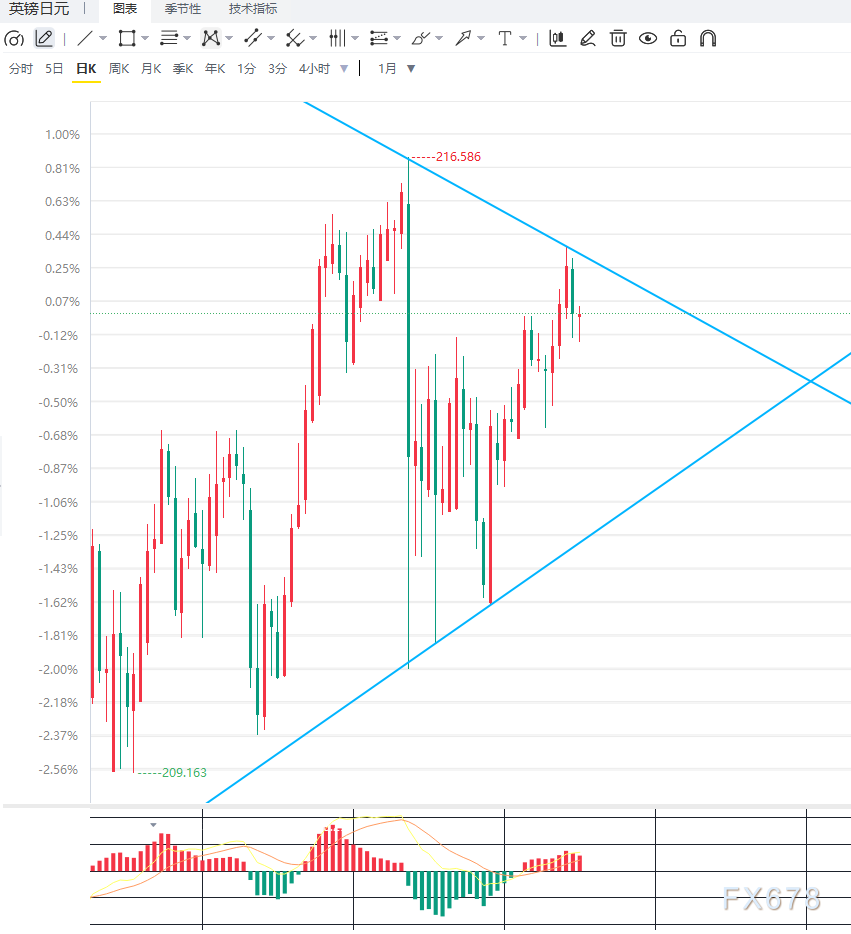
From the perspective of the daily structure, the pound against the yen as a whole still maintains a medium-term upward trend, but the short-term adjustment pressure has increased significantly. The price has entered the consolidation stage after falling back from this week's high near 215.50. The MACD indicator is running at a high level, but the red kinetic energy column continues to shorten, indicating that the upward momentum has begun to weaken. The RSI indicator fell back to around 55, and the market sentiment gradually shifted from strong to neutral
From the observation of the 4-hour period, the exchange rate has fallen below the 100-hour simple moving average, which is regarded as a short-term bearish signal. If the support area of 214.00 is broken later, it may further descend the support levels of 213.20 and 212.50. Above, the attention is paid to the resistance areas of 215.50 and 216.30. Only by re-breaking the above positions can the bulls be expected to regain their dominance.
edit summary
The recent correction of the pound against the yen is mainly affected by the rising expectations of the Bank of Japan's interest rate hike and the potential intervention of the Japanese government in the foreign exchange market. As the market gradually believes that Japan's monetary policy will further normalize, the yen has gained new fundamental support. At the same time, the cooling of the Bank of England's interest rate hike expectations has weakened the pound's interest rate advantage, weakening the upward momentum of the exchange rate. The future policy meeting of the Bank of Japan will become an important event to determine the direction of the exchange rate. If the Bank of Japan releases a more hawkish signal, the pound against the yen may face further adjustment pressure. However, the energy risks caused by the situation in the Middle East will still limit the appreciation of the yen. Overall, the short-term exchange rate may maintain a high volatility and weak pattern. Investors need
Please indicate the source: https://www.daoctech.com/fxschool/2687.html
Disclaimer: The content of this article does not represent the views of the Institute of Foreign Exchange. The content is for reference only and does not constitute investment advice. Investors operate accordingly at their own risk.